 listicle
7 Ways to Lower Homeowners Insurance Premiums in 2026
Table of Contents
- Shop Around and Compare Quotes Every Year
- How to Bundle Insurance Policies for Maximum Savings
- Homeowners Insurance Deductible Explained: Raising It to Lower Premiums
- The Impact of Credit Score on Insurance Premiums
- Upgrade Home Security and Safety Features
- Retrofit Your Home for Disaster Resistance and Climate Risks
- Review Your Coverage Limits and Exclude Land Value
- Frequently Asked Questions
Last Updated: September 19, 2026
Shop Around and Compare Quotes Every Year
The single most effective way to lower homeowners insurance is to compare quotes from multiple carriers every year instead of letting a policy auto-renew. Loyalty rarely pays in this market: a carrier that offered the sharpest rate three years ago may now sit well above the competition.
A common mistake is comparing only the premium. Two policies with the same headline price can differ enormously in replacement cost coverage, actual cash value vs. replacement cost on personal property, and liability protection. Compare on coverage first, price second.
What most guides miss is that renewal season is your use window. Get three to five quotes within two weeks of your renewal date, then ask your current carrier to match the best one. Many will.
How to Bundle Insurance Policies for Maximum Savings
Bundling home and auto policies with one carrier is the most reliable multi-policy discount available, and it also simplifies your renewal calendar. A common approach is to run the bundled quote and the standalone quotes side by side, because a bundling discount on an overpriced base rate can still cost more overall.
Three bundling moves that usually pay off:
- Combine home and auto with the same carrier for the multi-policy discount
- Add an umbrella liability policy to the same account for a further credit
- Ask whether bundling a rental property or small business policy qualifies
Where bundling falls short: if your auto insurer is expensive, the discount may not close the gap. Split the policies and revisit next year. Ask your agent to run both scenarios side by side so you can see which structure actually costs less.
Homeowners Insurance Deductible Explained: Raising It to Lower Premiums
A homeowners insurance deductible is the amount you pay out of pocket on a covered claim before the insurer pays the rest. Raising it is the fastest lever most homeowners have, because a higher deductible shifts a predictable amount of risk onto you in exchange for a lower premium.
The trade-off is real. Moving from a low deductible to a higher one can cut your premium meaningfully, but you must be able to cover that amount in cash after a loss. Storms and fires rarely arrive at a convenient time.
A useful rule: set your deductible at the highest figure you could pay tomorrow without borrowing. If that number feels uncomfortable, keep the deductible lower and look for savings elsewhere.
The Impact of Credit Score on Insurance Premiums
Your credit-based insurance score is one of the few premium levers you can move without touching your coverage, and it is the one most homeowners misunderstand. It is not your FICO score. It is a separate model that insurers use to predict the likelihood of a claim, and it draws on the same underlying credit file: payment history, outstanding balances, length of credit history, and recent inquiries.
The mechanism matters because the two scores can diverge. A homeowner with a strong FICO score can still carry a weak insurance score if the file shows high revolving utilization or a thin credit history. That is why pulling your credit report and reading it line by line is the first step, not a generic "pay your bills on time" reminder.
What actually moves the insurance score:
- Payment history. A single reported late payment can sit on the file for years and drag the score down. Set autopay on every account, even the minimum.
- Revolving utilization. Carrying balances near the limit signals risk. Paying balances down below roughly a third of the limit is the fastest single improvement most homeowners can make.
- Length of history. Closing your oldest card shortens your file. Leave long-standing accounts open even if you rarely use them.
- New inquiries. Opening several accounts in a short window looks like distress. Space applications out.
- Errors. A misreported late payment, a collection that belongs to someone else, or an account you never opened can all depress the score. Dispute them in writing with the credit bureau.
Where the law changes the picture: some states restrict or prohibit insurers from using credit information in homeowners pricing, and a handful limit how it can be used. The rules vary, and they change.
One more mechanism worth knowing: insurers typically re-rate your policy at renewal, not mid-term. If you improve your credit after your policy is issued, the benefit usually shows up at the next renewal. Time your shopping accordingly.
Upgrade Home Security and Safety Features
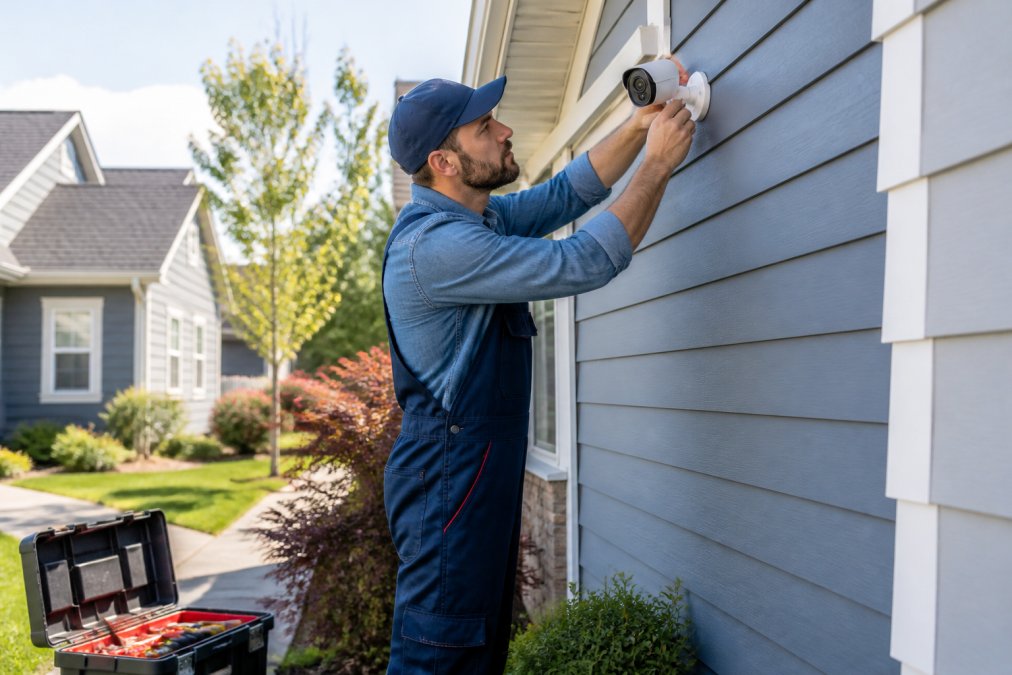
Security and safety upgrades earn discounts because they reduce the odds of a claim. A monitored security system, smoke detectors, and water leak sensors are the most commonly credited improvements, and the discounts often stack.
Retrofit Your Home for Disaster Resistance and Climate Risks
Regional climate risk increasingly drives what you pay, and retrofitting is how you respond to it. In wildfire-prone areas, that means ember-resistant vents, Class A roofing, and defensible space cleared of brush. In hurricane zones, storm shutters, impact-rated windows, and roof-to-wall strapping matter most. In hail country, impact-resistant shingles earn credits from many carriers.
Review Your Coverage Limits and Exclude Land Value
Review your coverage limits at every renewal, because dwelling coverage that was right three years ago may now be too low or too high. Replacement cost is what it costs to rebuild your home at today's prices, and land value is not part of that calculation. If your policy includes land value in the dwelling limit, you are insuring something that cannot burn down.
The report most homeowners never pull: your CLUE file
This is the gap almost every guide skips. Your claims history is a major rating factor, and you have a legal right to see it. The Comprehensive Loss Underwriting Exchange, or CLUE, is a claims-history database maintained by LexisNexis, and insurers routinely pull your CLUE report when they quote or renew your policy.
How to request and correct it:
- Request your free CLUE report from LexisNexis. You are entitled to one free report per year, and you can request it online or by mail.
- Read every loss line carefully. Check the date, the cause of loss, the amount paid, and whether the claim was actually closed without payment.
- Dispute anything inaccurate in writing. LexisNexis is required to investigate and correct or remove information that cannot be verified.
- Re-shop your policy once the report is clean. A corrected claims history can change the quotes you receive.
Post-renovation premium adjustments
A finished basement, an added bathroom, a new roof, or a replaced HVAC system all change your home's replacement cost, and your premium should be recalculated rather than guessed. The mistake most homeowners make is waiting until renewal to mention the work, or never mentioning it at all.
| Problem | Fix | Where It Shows Up |
|---|---|---|
| Overpaying at renewal | Compare 3-5 quotes yearly | Premium |
| Land value in dwelling limit | Exclude it, insure structure only | Dwelling coverage |
| Outdated rebuild estimate | Add inflation guard, re-review | Coverage limits |
| Unreported safety upgrades | Send receipts to carrier | Discount eligibility |
| Errors on claims history | Pull CLUE report, dispute | Underwriting |
| Unreported renovation | Notify carrier with permits and photos | Replacement cost and credits |
Frequently Asked Questions
How do you get your homeowners insurance to go down?
You can lower homeowners insurance premiums by shopping around for quotes annually, bundling home and auto policies, raising your deductible, improving your credit-based insurance score, and installing security or disaster-mitigation features. Reviewing your coverage limits and removing land value from replacement cost also helps. Each strategy reduces the risk your insurer assumes, which can translate into a lower premium. Start with a quote comparison and ask your agent which discounts you qualify for.
Does bundling home and auto insurance actually save money?
Bundling home and auto policies often reduces premiums because insurers offer multi-policy discounts to keep both accounts. The exact savings depend on your carrier, location, and risk profile. When you bundle, you also simplify payments and may get better claims support. Ask your agent to compare the bundled rate against separate policies from different carriers, because bundling is not always the cheapest option for every household.
How do home security systems affect insurance rates?
A monitored security system, smoke detectors, and water-leak sensors can lower your premium because they reduce the chance of a costly claim. Insurers view these features as risk-reduction measures and often apply discounts. The discount amount varies by carrier and system type. Keep receipts and monitoring contracts, then send proof to your insurer so the discount is applied at renewal. Fire mitigation and storm shutters can also help.
What is the impact of a higher deductible on insurance premiums?
A higher deductible means you pay more out of pocket before coverage kicks in, which lowers your premium because the insurer takes on less risk. For example, moving from a $500 to a $2,000 deductible can reduce your annual premium, but you need enough savings to cover the higher amount if you file a claim. Choose a deductible you can afford comfortably. Ask your agent to run quotes at several deductible levels.
What factors most significantly impact homeowners insurance premiums?
The biggest factors include your home's replacement cost, location and regional climate risks, claims history (CLUE report), credit-based insurance score, deductible level, and coverage limits. Older homes or those with outdated systems may cost more to insure. Bundling policies and safety upgrades can offset some of these costs. An annual review with your agent helps you spot coverage gaps and premium adjustments after renovations.