 listicle
5 Best Home Security Systems for Insurance Discounts
Table of Contents
- Quick Comparison: Top 5 Systems for Insurance Savings
- 1. ADT: The Gold Standard for Professional Monitoring
- 2. SimpliSafe: DIY Flexibility with Contract-Free Monitoring
- 3. Vivint: Premium Smart Home Integration and Automation
- 4. Ring Alarm: Affordable Ecosystem Integration
- 5. Abode: Flexible Third-Party Device Compatibility
- Homeowners Insurance Security System Discount Percentage Explained
- Monitored vs Unmonitored Security System Insurance Discount
- How to Get Proof of Security System for Insurance
- Frequently Asked Questions
Last Updated: September 27, 2026
Quick Comparison: Top 5 Systems for Insurance Savings
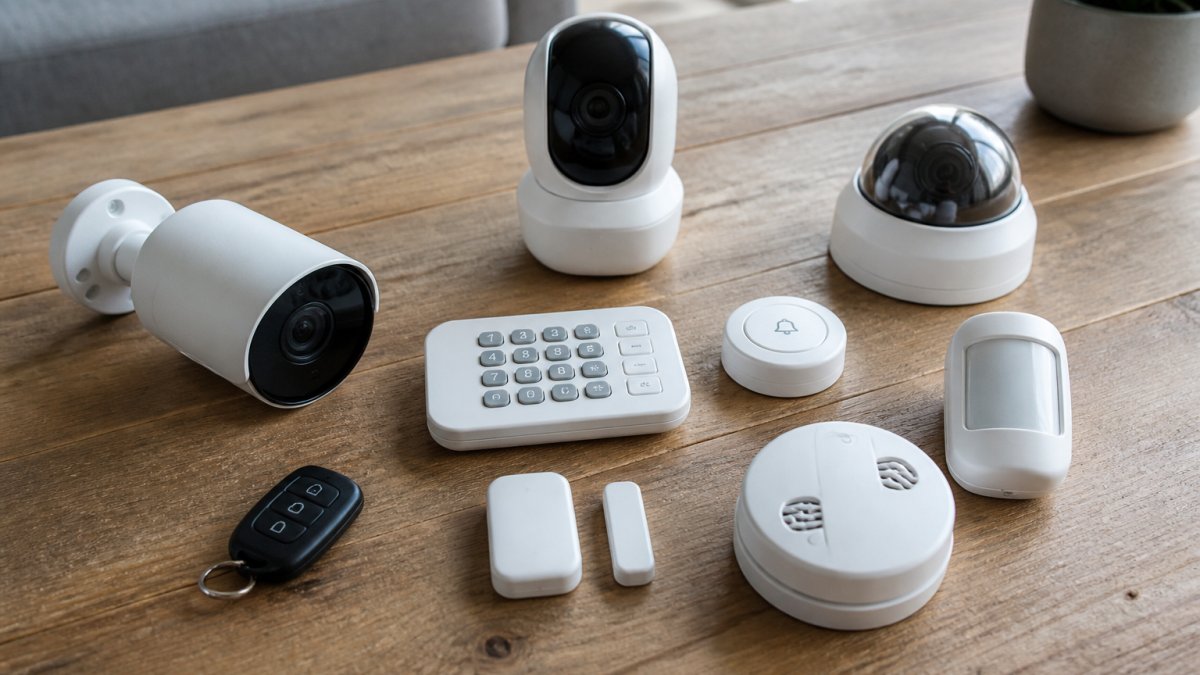
Finding the 5 best home security systems for insurance discounts starts with one hard truth: the discount usually comes from your insurer, not the home security systems company. At Bringas Insurance, we see homeowners chase flashy hardware when what actually moves a premium is documented, professionally monitored protection. This guide ranks five systems by how well they support a discount claim, then shows you how to file for one.
Quick Picks:
- Best Overall: ADT, strongest reputation with insurance providers
- Best DIY Value: SimpliSafe, contract-free monitoring at $22.99/month
- Best Smart Home: Vivint, premium automation and cameras
- Best Budget Ecosystem: Ring Alarm, $20/month monitoring
- Best for Tinkerers: Abode, free self-monitoring tier, wide device support
| System | Starting Monitoring | Contract | Best For |
|---|---|---|---|
| ADT | Contact for pricing | Long-term typical | Insurance verification |
| SimpliSafe | $22.99/month | None | DIY, budget |
| Vivint | Contact for pricing | Required | Smart home |
| Ring Alarm | $20/month | None | Amazon ecosystem |
| Abode | Free tier | None | Third-party devices |
1. ADT: The Gold Standard for Professional Monitoring
ADT is the safest bet when your goal is a clean discount approval. It offers professional installation, 24/7 monitoring, cellular backup, and smart home integration. Insurers recognize the name, which speeds up verification.
The trade-off is commitment. ADT typically requires long-term contracts, and pricing isn't published, so you'll need a quote. For homeowners who want zero ambiguity with their carrier, that paperwork trail is worth it.
2. SimpliSafe: DIY Flexibility with Contract-Free Monitoring
SimpliSafe suits homeowners who want a discount without a five-year handshake. Setup needs no drilling, monitoring runs $22.99/month with no long-term contract, and sensors cover smoke, water, and freeze.
The limitation: fewer smart home integrations than premium rivals. If your insurer only needs proof of professional monitoring, SimpliSafe delivers it cheaply.
3. Vivint: Premium Smart Home Integration and Automation
Vivint is the pick when you want automation and protection in one system. It bundles professional installation, HD cameras, and AI-driven threat detection with deep smart home control.
Expect a higher price point than DIY options, and pricing requires a consultation. For policyholders stacking smart home integration with monitored security, Vivint gives underwriters plenty to credit.
4. Ring Alarm: Affordable Ecosystem Integration
Ring Alarm wins on price and ecosystem. Monitoring starts at $20/month, installation is DIY, and it pairs with Ring doorbells and cameras plus Alexa voice control.
The catch is data sharing, a real privacy concern for some households. If you already own Ring devices, this is the cheapest path to monitored coverage.
5. Abode: Flexible Third-Party Device Compatibility
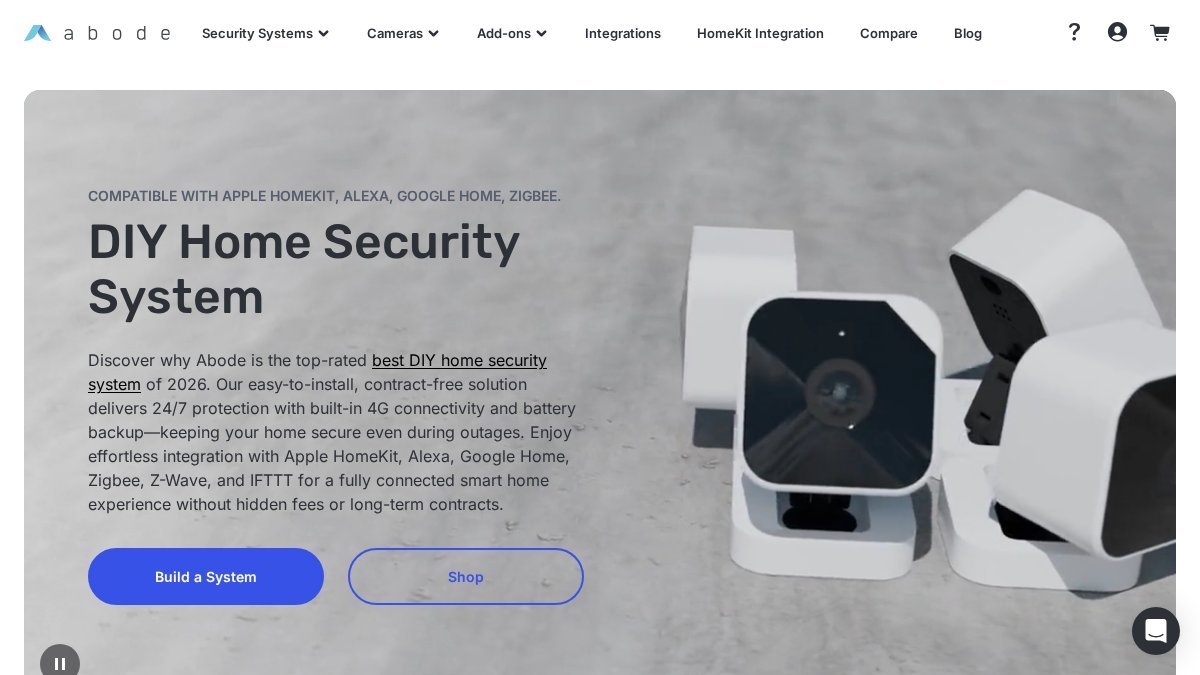
Abode is built for tinkerers. It supports Z-Wave and Zigbee devices, offers a free self-monitoring tier, and works with HomeKit. That flexibility lets you assemble coverage around devices you already own.
The interface can overwhelm non-technical users. Note that self-monitoring alone often won't satisfy insurers, who usually want a central station behind the alarm.
Homeowners Insurance Security System Discount Percentage Explained
The homeowners insurance security system discount percentage is not a single number, and any article that hands you one flat figure is guessing. What actually drives the number is a stack of qualifying features, and each one moves the premium a little further.
The typical range, by feature tier:
- Basic burglar alarm (local siren, no monitoring): Most carriers offer little to nothing, and many offer zero. A noisy box on the wall is not an underwriting credit.
- Professionally monitored burglar alarm (central station, 24/7): This is the floor for a real discount. A common pattern is a low-single-digit percentage off the base premium.
- Monitored alarm plus fire and smoke detection: Adds another increment. Fire is the loss insurers fear most, so heat and smoke sensors are weighted heavily.
- Monitored alarm plus water leak and freeze sensors: Water damage is one of the most frequent and expensive homeowner claims, and carriers increasingly credit automatic shutoff valves and leak sensors.
- Full stack (burglary + fire + water + central station): This is where the largest published discounts live, and where the percentage actually becomes worth the hardware spend.
Why the same system earns different discounts at different carriers:
Each insurer files its own rating rules with the state department of insurance, so the credit is baked into that carrier's approved rate structure. Two neighbors with identical ADT systems can see different savings because their carriers weight monitored burglary, fire, and water differently. Your deductible, your claims history, and whether you carry replacement-cost or actual-cash-value coverage all shift the math on top of that. (Source: National Institute of Standards and Technology (NIST) cybersecurity guidelines)
The stacking angle most guides skip:
Smart-home devices are the underused lever.
Monitored vs Unmonitored Security System Insurance Discount
The monitored vs unmonitored security system insurance discount gap is the biggest factor . Professional monitoring, where a central station contacts you and emergency services, is what insurers reward. Self-monitoring via app rarely qualifies.
How to Get Proof of Security System for Insurance
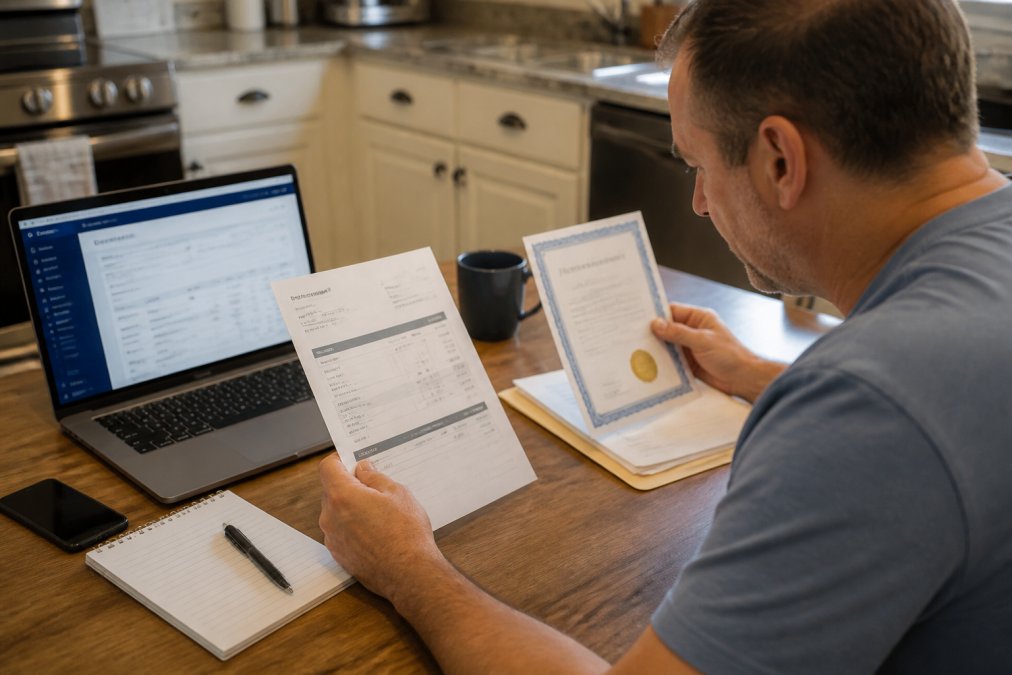
Proof of installation is where most discount claims stall, and it's the step competitors gloss over. Insurers don't want a photo of a keypad, they want a paper trail that matches their filed underwriting criteria. Here's the exact documentation set, what each item must contain, and how to submit it so it clears on the first pass.
The documentation checklist:
- Monitoring contract or certificate, must show your name, the service address, the monitoring company's legal name, the central station's UL listing, and the account number. A generic brochure or order confirmation won't do.
- Installation invoice, dated, itemized, and showing the equipment installed (panel, sensors, smoke/heat detectors, water sensors). This is what proves the system exists and what it covers.
- Central station details, the monitoring company's name, the central station's location, and confirmation of 24/7 monitoring. Some carriers want the central station's UL certificate number.
- Proof of active subscription, a current billing statement or a letter from the monitoring company confirming the account is in good standing. A lapsed subscription voids the credit.
- Alarm system certification, some carriers require a signed certification form, often on the carrier's own template, confirming the system meets their minimum standards.
- Water and fire device documentation, if you're claiming stacking credits, you need separate proof that leak sensors, shutoff valves, and smoke/heat detectors are installed and monitored.
A submission workflow that works:
- Request the carrier's requirements in writing first. Ask your agent for the exact documentation list and any carrier-specific certification form before you buy or submit anything.
- Collect the documents in one packet. Monitoring contract, invoice, central station confirmation, and current billing statement together. Don't send them piecemeal.
- Submit to your agent, not the call center. Your agent can confirm the packet matches the carrier's filed criteria before it goes to underwriting.
- Request the adjustment in writing. Ask for the premium change and the effective date in writing so you have a record.
- Re-verify at every renewal. Carriers re-check coverage and contractual requirements annually. If your monitoring lapses or you change providers, the credit can silently drop off.
A simple proof-of-installation template you can adapt:
Frequently Asked Questions
Can you get a discount on homeowners insurance if you have a security system?
Yes, many insurance providers offer premium reductions for homes with monitored security systems. Professional monitoring, fire and smoke detection, and water leak sensors often qualify for savings. Contact your insurance provider to confirm which features meet their underwriting criteria.
Do insurance companies require professionally monitored security systems for discounts?
Most insurance providers require professional monitoring, specifically central station monitoring, to qualify for the largest discounts. Unmonitored or self-monitored systems may still earn smaller premium adjustments, but the savings are limited because no third party verifies the alarm. Check your policy's contractual requirements before purchasing a system.
How do I provide proof of a security system to my insurance carrier?
You typically need an alarm system certification or a proof of installation document. This can include your monitoring contract, an installation invoice, or a certificate from your security company. Some insurers accept a signed statement confirming the system meets their requirements. Submit these documents to your policyholder portal or agent to apply the discount.
Does a DIY security system qualify for the same discounts as a professionally installed one?
Not always. DIY systems like SimpliSafe or Ring Alarm can qualify if they include professional monitoring through a central station. However, some insurers require professional installation for discount eligibility. Review your provider's underwriting criteria and ask whether self-installed systems with monitoring meet their requirements for premium reduction.
What specific security features do insurance providers look for?
Insurers prioritize central station monitoring, fire and smoke detection, burglary protection, and environmental monitoring such as water leak detection. Smart home integration and cellular backup also strengthen your risk mitigation profile. The more loss prevention features your system includes, the higher your potential annual savings.
Getting a security discount right takes more than buying a system. Carriers weigh monitoring type, documentation, claims history, and state rules, and one missing certificate can erase your savings. Bringas Insurance helps homeowners sort through coverage options, review policy endorsements, and confirm exactly what your insurer credits before you spend a dollar. Request a free quote and let our team find the right protection for your home.