 comparison
Dwelling Coverage vs Personal Property Coverage
Table of Contents
- Dwelling Coverage vs Personal Property Coverage: The Core Difference
- Side-by-Side Comparison: Dwelling Coverage vs Personal Property Coverage
- What Dwelling Coverage Protects (Coverage A)
- What Personal Property Coverage Protects (Coverage C)
- How to Calculate Replacement Cost for Home Insurance
- What Happens If Dwelling Coverage Is Insufficient
- When a Scheduled Personal Property Endorsement Makes Sense
- Conclusion: Sizing Both Coverages Correctly
- Frequently Asked Questions
Last Updated: September 29, 2026
Dwelling Coverage vs Personal Property Coverage: The Core Difference
Dwelling coverage pays to rebuild the physical structure of your home after a covered peril, while personal property coverage pays to replace the belongings inside it. That distinction, structure versus contents, is the backbone of every homeowners insurance policy. This guide breaks down how each coverage works, where they overlap, and how to size both correctly.
Side-by-Side Comparison: Dwelling Coverage vs Personal Property Coverage
The clearest way to see how these coverages differ is to compare what they protect, how limits are set, and how claims are paid.
| Feature | Dwelling Coverage (Coverage A) | Personal Property Coverage (Coverage C) |
|---|---|---|
| What it protects | Physical structure of the home | Belongings inside the home |
| Typical limit | Based on rebuild cost | Percentage of dwelling limit |
| Valuation method | Replacement cost or actual cash value | Actual cash value or replacement cost |
| Detached structures | Covered under separate limit | Not covered |
| Belongings away from home | Not covered | Covered, usually up to a sub-limit |
| Common exclusions | Flood, earthquake, neglect | High-value items, business property |
What Dwelling Coverage Protects (Coverage A)
Dwelling coverage, also called Coverage A, protects the physical structure of your home against covered perils: the roof, walls, foundation, built-in appliances, and attached structures like a garage or deck.
Detached Structures and Other Property on the Lot
Detached structures like a freestanding garage, shed, or fence usually fall under a separate limit, often labeled Coverage B, typically a percentage of your dwelling coverage. They are not automatically folded into Coverage A, so check your policy.
What Personal Property Coverage Protects (Coverage C)
Personal property coverage, or Coverage C, protects the belongings inside your home: furniture, clothing, electronics, kitchenware, and personal effects. It responds to the same covered perils as dwelling coverage, including fire, theft, and vandalism.
The Special Limits Schedule: Where Coverage C Quietly Caps Out
Most homeowners policies include a "special limits of liability" schedule that caps reimbursement for certain categories regardless of your overall Coverage C limit. Dollar figures vary by insurer, but the categories are consistent:
- Money, bank notes, and coins, typically capped in the low hundreds of dollars
- Securities, deeds, and stamps, similar low cap
- Jewelry, watches, and precious stones, often capped around $1,000 to $2,500 for theft
- Furs and garments trimmed with fur, capped for theft
- Silverware, goldware, and pewterware, capped for theft
- Firearms, capped for theft
- Business property, capped both on and off the premises
- Electronics and home office equipment, may be capped when used for business
Off-Premises Coverage: What Travels With You
Personal belongings are covered inside your home and, up to a sub-limit, anywhere in the world. A laptop stolen from a hotel room or a camera lost on a trip may be covered, often at a reduced percentage of your personal property limit.
Two important exceptions to remember:
- Items in a storage unit are usually covered, but the off-premises sub-limit applies.
- Items in a secondary residence you own may be excluded or limited, depending on the policy form.
RCV vs. ACV for Contents
The valuation method changes what you receive. Under replacement cost value (RCV), a ten-year-old sofa is replaced with a new comparable one. Under actual cash value (ACV), you receive the depreciated value, what the used sofa would sell for today.
A Scenario: How Coverage C Responds to a Burglary
Suppose a burglar takes a laptop, a television, a gold necklace, and $300 in cash. A typical policy might respond like this:
- The laptop and television fall under your general Coverage C limit and are paid at RCV or ACV, depending on your policy.
- The gold necklace hits the jewelry sub-limit, so only the capped amount is paid, not the necklace's full value.
- The $300 in cash hits the money sub-limit, which may be lower than $300, so only the capped amount is paid.
How to Calculate Replacement Cost for Home Insurance
Replacement cost is what it would take to rebuild your home at today's material and labor prices, not market value. To calculate it, multiply your home's square footage by local construction cost per square foot, then adjust for custom finishes, a finished basement, or a detached structure. (Source: the National Association of Insurance Commissioners (NAIC))
- Local labor and material costs vary widely by region and have risen sharply in recent years.
- Custom features, hardwood floors, tile work, built-ins, crown molding, cost more to replicate than standard finishes.
- Code upgrades, bringing a rebuilt home up to current building codes can add significant cost that older policies may not cover without an ordinance-or-law endorsement.
- Debris removal, clearing a destroyed structure can add thousands of dollars.
- Detached structures, a garage, shed, or fence is usually covered under a separate limit (often labeled Coverage B), typically a percentage of your dwelling limit.
Two Valuation Methods Drive Your Payout
- Replacement cost value (RCV): pays to rebuild or replace with new materials at current prices
- Actual cash value (ACV): pays replacement cost minus depreciation
RCV policies cost more upfront but pay significantly more at claim time. The same distinction applies to personal property: an ACV policy on a ten-year-old sofa pays its depreciated value, not replacement cost.
How Personal Property Limits Are Actually Sized
Here is the part most homeowners miss: your Coverage C limit is usually not calculated independently. It is typically set as a percentage of your Coverage A (dwelling) limit, commonly 50% to 70%.
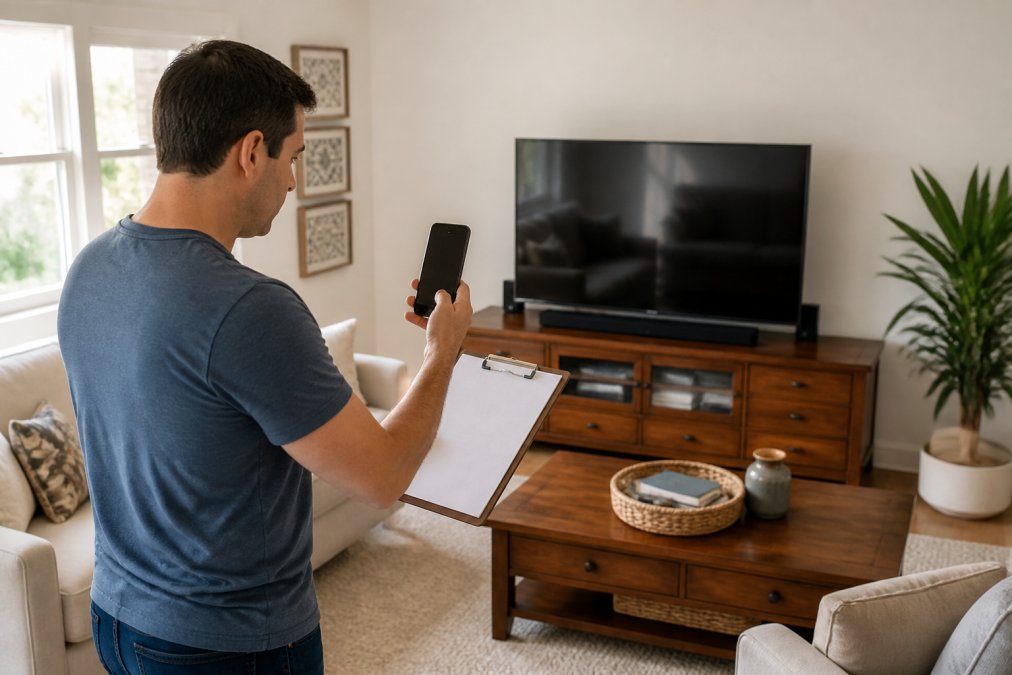
- Walk room by room and list every item above a threshold you care about (many people use $100).
- Estimate replacement cost for each item, what it would cost to buy new today, not what you paid.
- Group by category and check the totals against the special limits schedule (jewelry, electronics, cash, etc.).
- Compare the total against your policy's Coverage C limit. If the total exceeds the limit, raise the limit or add endorsements.
- Flag high-value items that exceed sub-limits and consider a scheduled personal property endorsement.
Tools and Methods for Building the Inventory
A written list is better than nothing, but it is slow and easy to lose. Practical alternatives:
- Smartphone video walkthrough, narrate as you film each room, opening closets and drawers. This is the fastest method and captures items you might forget to list.
- Cloud photo albums, photograph receipts, serial numbers, and model plates, and store them in a cloud account, not on a device inside the home.
- Spreadsheet template, a simple columns layout (item, room, purchase date, purchase price, replacement cost, serial number) works well for high-value items.
- Home inventory apps, several free and low-cost apps exist that let you photograph items, attach receipts, and export a PDF for your insurer. The specific app matters less than the habit of updating it.
The Renovation Trap
Home improvements raise your dwelling coverage requirement without necessarily raising your personal property needs. A $60,000 kitchen remodel with custom cabinetry, stone counters, and upgraded appliances increases rebuild cost, but you do not suddenly own $60,000 more in movable belongings. Cabinets and counters are part of the dwelling; the refrigerator and range may fall under Coverage C or Coverage A, depending on how the policy defines them.
A Scenario: How the Two Limits Interact After a Kitchen Fire
Suppose a kitchen fire destroys the cabinets, counters, and appliances, and smoke damages furniture in the living room. Here is how the coverages split the claim:
- Dwelling coverage (Coverage A) pays to rebuild the cabinets, counters, walls, and any built-in appliances.
- Personal property coverage (Coverage C) pays to replace the movable items, the sofa, rug, and any freestanding appliances damaged by smoke.
- Additional living expenses (Coverage D) may pay for a hotel and meals while the kitchen is rebuilt.
What Happens If Dwelling Coverage Is Insufficient
When dwelling coverage is insufficient, you become a co-insurer of your own loss. Most policies include a replacement cost cushion, but if your limit is far below true rebuild cost, the insurer may pay only a proportional share.
When a Scheduled Personal Property Endorsement Makes Sense
A scheduled personal property endorsement covers high-value items that exceed your policy's standard sub-limits, usually jewelry, art, musical instruments, and collectibles.
Conclusion: Sizing Both Coverages Correctly
The hardest part of home insurance is not choosing a policy, it is setting limits that match what you own and what it would cost to rebuild. Too many homeowners learn their dwelling coverage was insufficient only after a fire or storm, when the gap becomes a personal bill.
Frequently Asked Questions
What does dwelling coverage not cover?
Dwelling coverage pays to repair or rebuild the physical structure of your home, including the roof, walls, and foundation. It does not cover your furniture, electronics, or clothing, which fall under personal property coverage. It also excludes the land beneath the home, and standard policies do not pay for damage from floods, earthquakes, or normal wear and tear. Those risks need separate policies or endorsements. Review your declarations page so you know exactly which covered perils apply to your dwelling limit.
How much dwelling coverage do I actually need?
You need enough dwelling coverage to rebuild your home at current local construction costs, not the price you paid for it or its market value. A common starting point is your home's square footage multiplied by local per-square-foot rebuild costs, then adjusted for features like custom millwork, masonry, or an older roof. Ask a licensed agent to run a replacement cost estimate, because underinsuring the structure means you absorb the shortfall out of pocket after a covered loss.
Does personal property coverage apply to items stolen outside the home?
Yes, in most standard homeowners policies personal property coverage follows your belongings when you travel, so a laptop stolen from a hotel room or a bag taken from your car may be covered. Limits still apply, and off-premises theft may carry a lower sub-limit than your overall Coverage C amount. Keep receipts and serial numbers, file a police report, and check your policy's off-premises terms before assuming a claim will be paid in full.
When should I add a scheduled personal property endorsement?
A scheduled personal property endorsement lists specific high-value items, such as jewelry, musical instruments, cameras, or collectibles, at agreed values. It makes sense when a single item is worth more than your policy's per-category sub-limit, or when you want broader protection than the standard policy provides. Scheduled items typically carry no deductible for that item and cover risks like accidental loss or mysterious disappearance that a standard policy may exclude. Bring appraisals or receipts when you request the endorsement.
Is dwelling coverage the same as a dwelling-only policy?
No. Dwelling coverage is one part of a standard homeowners policy, usually labeled Coverage A. A dwelling-only policy, often written on a DP1 or DP3 form, insures just the structure, typically for landlords or vacant homes, and leaves out personal property and liability. If you live in the home and want your belongings and liability protected too, a full homeowners policy with both dwelling and personal property coverage is usually the better fit.