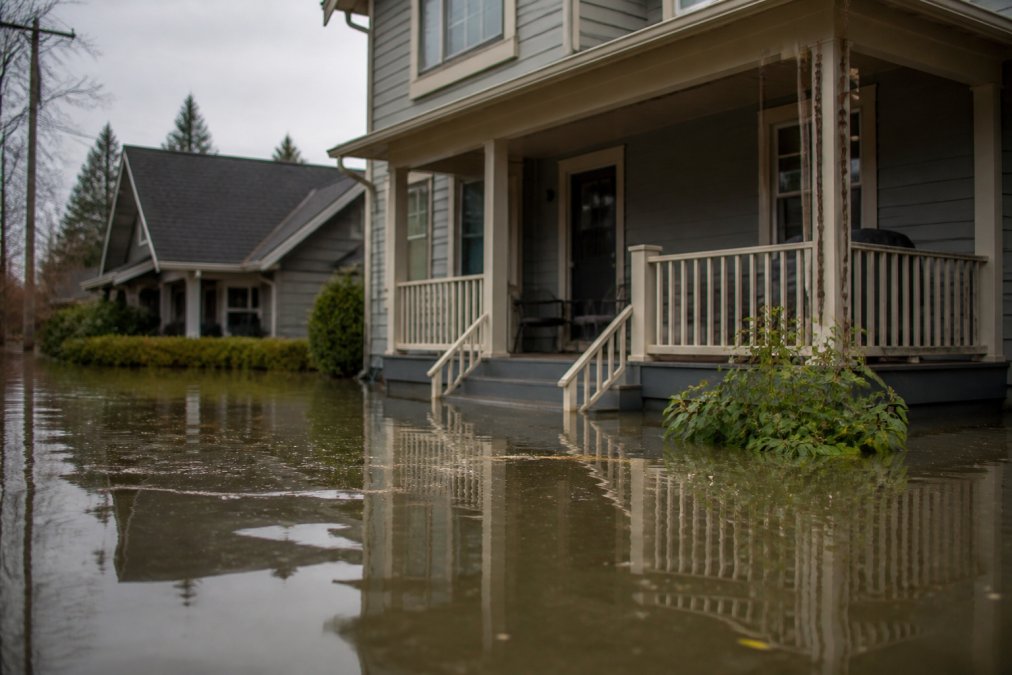
 ultimate-guide
Is Flood Insurance Worth It in Snohomish County?
Table of Contents
- How Snohomish County Flood Risk Differs by Location
- FEMA Flood Maps Snohomish County: How to Read Your Zone
- What Does Flood Insurance Cover (and What It Doesn't)
- Average Cost of Flood Insurance Washington State
- Is Flood Insurance Worth It in Snohomish County?
- NFIP vs. Private Flood Insurance: Which Fits Your Property?
- Elevation Certificates and Waiting Periods: Details That Change Your Cost
- Frequently Asked Questions
Last Updated: September 25, 2026
How Snohomish County Flood Risk Differs by Location
Flood risk in Snohomish County is not uniform, and that single fact drives every coverage decision you will make. The Snohomish River basin drains roughly 1,800 square miles before it empties into Puget Sound, and communities along that path face different exposure than properties on higher ground a few miles away. At Bringas Insurance, we see this play out constantly: two homes ten minutes apart can carry wildly different flood insurance requirements.
The county's floodplain includes the Snohomish, Skykomish, and Snoqualmie river systems, plus low-lying areas near Everett's waterfront and tidal zones around Puget Sound. A property in the Snohomish River valley may sit in a mapped high-risk area while a home on a hillside in Monroe sits in a moderate or minimal-risk zone.
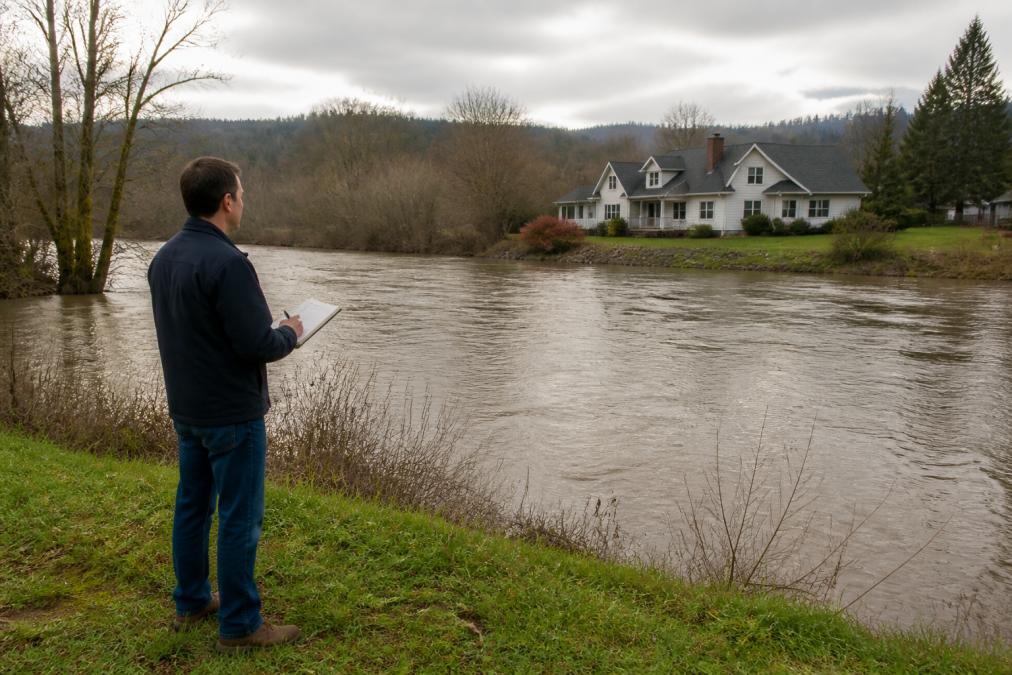
Location is the first filter. It is not the last.
FEMA Flood Maps Snohomish County: How to Read Your Zone
FEMA flood maps assign every property a flood zone, and that zone determines whether your mortgage lender can require flood insurance. The maps divide land into categories, with Zone AE marking high-risk areas where a base flood elevation is established.
Here is how the main zones translate for a Snohomish County property:
- Zone AE: High-risk, base flood elevation defined, mandatory purchase often applies
- Zone A: High-risk, no elevation determined, still a mandatory purchase zone
- Zone X (shaded): Moderate risk, typically the 500-year floodplain
- Zone X (unshaded): Minimal risk, outside the mapped floodplain
The FEMA Flood Map Service Center lets you pull the current map for any address. What most guides miss is that maps get revised. A property that sat in Zone X a decade ago can land in Zone AE after a map update, and the new zone triggers new lender requirements.
What Does Flood Insurance Cover (and What It Doesn't)
Flood insurance covers two separate things, and you buy them as separate line items. Building coverage pays for the structure: walls, foundation, electrical, plumbing, and built-in appliances. Personal property coverage pays for contents like furniture, clothing, and electronics.
What flood insurance does not cover surprises people. A standard policy excludes:
- Damage from sewer backup unless you add a rider
- Vehicles, which fall under auto coverage
- Outdoor property like fences, decks, and landscaping
- Temporary living expenses in most standard policies
- Basement contents beyond basic structural items
Homeowners insurance excludes flooding entirely. That is the single most important distinction in this whole decision, and it is why the National Flood Insurance Program exists as a separate market.
Average Cost of Flood Insurance Washington State
Average cost of flood insurance in Washington state depends on your zone, elevation, and coverage limits, so no single number applies to every property. What we can say is that pricing varies dramatically by location and structure type, and the spread between a low-risk Zone X home and a riverfront Zone AE home can be several multiples of the same base premium.
Here is how the pricing mechanics actually work, so you can estimate where your property lands before you ever call an agent.
What moves your premium, in order of impact:
- Flood zone: Zone AE rates are built around a defined base flood elevation (BFE). Zone A has no BFE, so carriers price conservatively. Zone X (shaded) sits in the moderate 500-year band and is usually the cheapest insurable tier.
- Elevation relative to BFE: This is the single largest lever. A home with its lowest floor two feet above BFE prices in a lower rate class than the same home one foot below BFE, sometimes by thousands of dollars a year.
- Coverage limits: NFIP building coverage tops out at $250,000 for a single-family home and $100,000 for contents. Private carriers can go higher, and each additional $50,000 of building coverage raises the premium.
- Deductible: Moving from a $1,000 to a $5,000 deductible typically cuts the premium meaningfully. The trade-off is that a small basement seep or a few inches of water may fall under your deductible entirely.
- Construction and foundation: A slab-on-grade home, a crawlspace home, and a home with a basement all price differently because the basement and crawlspace change what is exposed to water first.
A realistic way to bracket your number:
Most Snohomish County properties fall into one of three rough bands. Homes in unshaded Zone X with no prior loss history often see the lowest NFIP premiums, frequently in the low hundreds per year for building-only coverage. Shaded Zone X and Zone A properties land in the middle. Zone AE properties near the Snohomish, Skykomish, or Snoqualmie rivers, especially those at or below BFE, sit at the top of the range and can run into the thousands annually.
These are patterns, not quotes. The only way to know your number is to pull your zone from the FEMA Flood Map Service Center, gather your elevation data, and request pricing from both an NFIP write-your-own carrier and at least one private market carrier.
Is Flood Insurance Worth It in Snohomish County?
Is flood insurance worth it in Snohomish County? For most properties in a mapped high-risk zone, yes, because the cost of rebuilding after flood damage dwarfs years of premiums. For properties in minimal-risk zones, the answer depends on your tolerance for an uninsured loss.
Here is the honest math. Federal disaster assistance, when it is available, typically comes as a loan you repay, not a grant that covers you. Flood insurance pays a claim. That difference matters when a river crests.
A common mistake is assuming federal disaster aid will cover a flooded home. In practice, most federal assistance after a flood arrives as a low-interest loan that must be repaid, on top of your existing mortgage.
NFIP vs. Private Flood Insurance: Which Fits Your Property?
Two markets sell flood coverage, and they are not interchangeable. The National Flood Insurance Program (NFIP) is the federal program, standardized across the country and backed by the federal government. Private flood insurance is sold by individual carriers and reinsurers, and it is priced and underwritten like any other property policy.
Most guides stop at a feature table.
| Feature | NFIP | Private Flood |
|---|---|---|
| Coverage limits | Capped at federal maximums ($250,000 building / $100,000 contents for a single-family home) | Often higher, set by the carrier |
| Waiting period | 30-day standard waiting period on new policies, with limited exceptions | Varies by carrier; some can bind in as few as 10-14 days |
| Sewer backup | Add-on available | Frequently included |
| Pricing | Standardized by zone and elevation | Risk-based, varies widely by carrier and model |
| Claims handling | Administered through write-your-own carriers and the NFIP direct program | Handled by the issuing carrier |
| Replacement cost | Available on primary residences under certain conditions | Often available on both primary and secondary homes |
| Eligibility | Available in participating communities; some structures excluded | Carrier-specific; can cover properties NFIP declines |
The NFIP gives you a guaranteed market and predictable pricing. Private flood gives you flexibility, higher limits, and faster binding. The right answer for your property depends on your zone, your elevation, and how soon you need coverage to start.
Elevation Certificates and Waiting Periods: Details That Change Your Cost
An elevation certificate is a document prepared by a licensed surveyor that records your property's elevation relative to base flood elevation. It is the single most powerful tool for lowering a flood premium, because it gives the insurer the data to price your actual risk instead of assuming the worst.
The two details that change your flood premium most are your elevation certificate and your flood zone. Everything else is secondary.
Frequently Asked Questions
What is the average cost of flood insurance in Washington state?
The average cost of flood insurance in Washington state varies by flood zone, elevation, and coverage limits. NFIP policies for moderate-to-low-risk zones often cost less than those in high-risk zones, but premiums depend on your property's specific flood risk. Since Bringas Insurance has not provided pricing data, request a personalized quote to see your actual rate.
What does flood insurance not cover?
Standard flood insurance typically excludes damage from sewer backups (unless endorsed), basement contents in some NFIP policies, and outdoor property like decks, fences, and landscaping. It also does not cover temporary living expenses in most cases. Review your policy carefully or ask your agent what exclusions apply to your Snohomish County home before you buy.
How do I check my specific flood zone in Snohomish County?
You can check your flood zone using FEMA flood maps for Snohomish County, available through the FEMA Map Service Center or local planning office. Enter your address to see if you are in a high-risk zone like Zone AE or a moderate-risk zone. Your mortgage lender may also require a flood zone determination during the loan process.
Is flood insurance worth it for homes outside high-risk zones?
Homes outside high-risk zones can still flood due to heavy rain, snowmelt, or drainage issues. In Snohomish County, many properties near the Snohomish River Basin face some risk even if not in Zone AE. Lower-cost policies in moderate-risk zones can provide valuable protection against out-of-pocket costs from unexpected flooding.
Flood risk in Snohomish County is real, and the coverage gap in a standard homeowners policy is the part most families discover too late. Bringas Insurance helps homeowners, renters, and property investors find the right flood coverage for their specific location and situation, with free quotes and guidance in the language you speak at home. Get a free quote from Bringas Insurance and protect what matters most before the next high-water season.