 listicle
Home Insurance Discounts for New Homeowners 2026
Table of Contents
- Home Insurance Discounts for New Homeowners in 2026: What Actually Lowers Your Premium
- Home Insurance Bundling Discounts: The Fastest Path to Annual Savings
- Home Safety Features Insurance Discount: What Qualifies and How to Document It
- New Home vs. New to You: Why Underwriting Treats Them Differently
- How to Lower Homeowners Insurance Premiums Without Cutting Coverage
- Which Insurers Offer the Strongest New Homeowner Discounts
- Frequently Asked Questions
Last Updated: September 22, 2026
Home Insurance Discounts for New Homeowners in 2026: What Actually Lowers Your Premium
[Home insurance](/alternatives-to-standard-home-insurance-policies) discounts are price reductions insurers apply to your premium when your home or your habits lower their risk of paying a claim. For new homeowners, the timing matters: most discounts must be requested, and many are easiest to lock in during the first policy term. This guide from Bringas Insurance walks through the discounts that actually move the number, and the documentation each one requires.
Home Insurance Bundling Discounts: The Fastest Path to Annual Savings
Bundling is the single largest discount most new homeowners can capture, because it reduces the insurer's cost of acquiring and keeping you as a customer. When you place your auto and home policies with one carrier, the multi-policy credit usually applies to both.
A practical approach:
- List every policy you hold: auto, home, life, umbrella, rental property
- Ask each carrier what the multi-policy credit looks like across that full list
- Compare the bundled total against your current separate premiums, not against a single policy
Home Safety Features Insurance Discount: What Qualifies and How to Document It
Safety feature discounts reward equipment that detects or limits damage before a claim grows. The credit is not a flat rebate, it is a percentage reduction applied to a specific coverage line, usually the dwelling or the personal property premium. That is why two homeowners with identical alarm systems can see different savings: the credit is calculated against the premium for the coverage it protects, not against the total bill.
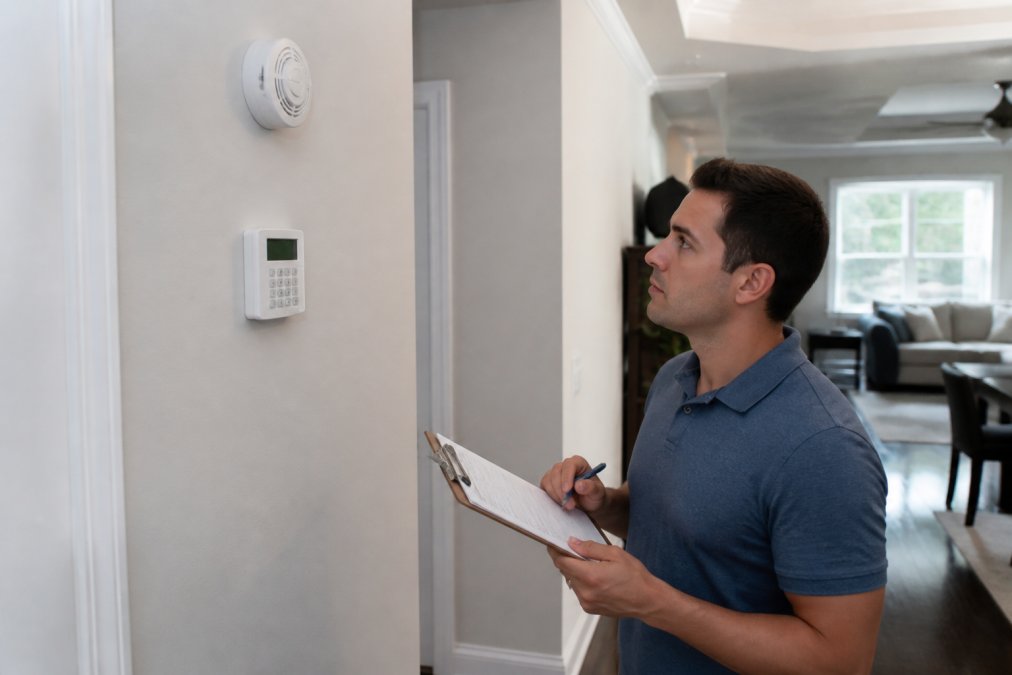
Commonly qualifying items fall into three buckets:
- Fire and life safety: smoke detectors, carbon monoxide alarms, sprinkler systems, and monitored fire alarms
- Theft deterrence: burglar alarms, deadbolt locks, window locks, and monitored security systems
- Water and property damage: water leak sensors, automatic shut-off valves, sump pump backups, and freeze sensors
Documentation Checklist by Device Type
Documentation is where most discount requests fail. An insurer will not take your word for it, and the proof required changes by device:
| Device | What the insurer typically wants |
|---|---|
| Smoke and CO alarms | Installation invoice, or a photo of the unit with the date stamp |
| Monitored burglar alarm | Monitoring contract showing the central station and account number |
| Water leak sensors | Receipt plus a photo showing the sensor mounted at the fixture |
| Automatic shut-off valve | Plumber's invoice naming the valve model and install date |
| Sprinkler system | Inspection certificate from a licensed contractor |
DIY vs. Professional Security System Verification
DIY systems can qualify, but verification works differently. A self-installed camera or door sensor may earn a smaller credit, or none, because there is no central monitoring station to confirm the alarm. Professionally monitored systems are easier to verify because the monitoring company provides documentation directly, often a certificate of monitoring that the insurer accepts without further questions.
How the Credit Is Calculated
Safety-feature credits are usually expressed as a percentage of the premium for the coverage they protect. A monitored burglar alarm might reduce the theft-related portion of your personal property premium, while a water shut-off valve might reduce the dwelling premium. Because the base premiums differ by home value and location, the dollar savings differ even when the percentage is identical.
New Home vs. New to You: Why Underwriting Treats Them Differently
A newly constructed home and a home that is simply new to you are underwritten as different risks. New construction typically carries lower risk in the early years because the roof, wiring, plumbing, and major systems are all current. That is why many carriers offer a new-home discount on homes built within a recent window, commonly the first 10 to 20 years after the certificate of occupancy, though the exact window is filed state by state. (Source: Federal Emergency Management Agency (FEMA) resources on flood mitigation)
The Renovation Credit Path for Resale Homes
If you purchased a resale home and renovated it, you may qualify for credits a standard resale policy would not include, but only if you document the upgrades. The credits usually attach to specific systems:
- Roof replacement: a new roof with a wind rating or impact rating can unlock a wind-mitigation credit, especially in coastal states
- Electrical panel upgrade: replacing a fuse box or outdated panel reduces fire risk and often qualifies
- Plumbing replacement: repiping from galvanized or polybutylene to copper or PEX can earn a water-damage credit
- HVAC replacement: a new system with a documented install date supports the home's overall condition rating
- Window upgrades: impact-rated or energy-efficient windows can qualify for both wind and green-home credits
How to Claim the Right Credit
One practical note: if you bought a home that was renovated by a flipper, the upgrades may not be documented in your name. Request the permit history before you close, and ask the seller for contractor invoices. Without that paper trail, the credit is difficult to claim after the fact.
How to Lower Homeowners Insurance Premiums Without Cutting Coverage
The safe way to lower homeowners insurance premiums is to reduce risk and increase your own share of small claims, not to strip coverage. Raising your deductible lowers the premium because you absorb more of each loss (Understanding your insurance deductibles). The trade-off is real: a higher deductible means more cash out of pocket when you file.
A workable sequence for most households:
- Raise the deductible only as high as your emergency fund can cover
- Add safety and monitoring features, then document them
- Bundle remaining policies with one carrier
- Ask about a claims-free credit if you have filed nothing in recent years
- Review the replacement cost estimate annually, since over-insuring the dwelling inflates the premium
Regional Discount Eligibility: Why Your ZIP Code Changes the Math
Discount eligibility is not uniform, and the reason is risk. Carriers file their rates and discount programs state by state, so the same safety feature or bundling credit can be worth different amounts depending on where the home sits. Wind exposure, wildfire risk, and local building standards all feed into what a carrier is willing to credit.
Which Insurers Offer the Strongest New Homeowner Discounts
The strongest new homeowner discounts come from carriers that combine a new-construction credit with bundling and safety-feature credits, because those stack. National carriers and regional insurers both compete here, and the best fit depends on your home's age, your other policies, and your location.
| Insurer | Notable Discounts | Best For | Pricing |
|---|---|---|---|
| Bringas Insurance | Bundling across home, auto, life, and business; free quotes | Households wanting one agent for every policy | Free quote |
| State Farm | Multi-policy bundling, new-construction credit | First-time buyers who want bundling plus resources | Contact for quote |
| Allstate | New home buyer, protective device, claim-free credits | Homes with recent safety upgrades | Contact for quote |
| Progressive | Bundling, new-construction credit, budget tool | Budget-focused buyers of new builds | Contact for quote |
| Amica Mutual | New-construction and multi-line credits | Buyers prioritizing service and dividends | Contact for quote |
| Liberty Mutual | New home buyer and protective device credits | Buyers wanting flexible coverage | Contact for quote |
| AAA | Member discounts on security and bundling | Existing members | Membership required |
Frequently Asked Questions
Do new homes qualify for lower insurance premiums?
Yes, newly constructed homes often qualify for lower premiums because they meet current building codes, use modern materials, and have new roofing, wiring, and plumbing. Insurers view these features as lower risk. Discounts for new construction vary depending on the carrier and the home's age. A home built within the last five years usually gets the strongest new-home credit. Ask your insurance agent whether your policy includes a new-home discount, since some carriers apply it automatically and others require you to request it.
How do I get discounts on homeowners insurance?
Start with bundling: combining home and auto with the same carrier is the single largest discount most homeowners can claim. Then layer in safety features like monitored security systems, smoke detectors, and water leak sensors. A claims-free history and paperless billing with automatic payments also reduce premiums. Finally, ask your agent for a full discount review, because many carriers offer credits that are not advertised. Bringas Insurance provides free quotes and can walk you through every discount your policy qualifies for.
Will home insurance rates go down in 2026?
Rates depend on regional weather losses, construction costs, and reinsurance pricing, so no one can promise a decrease. What you can control is which discounts you claim. New homeowners who bundle policies, document safety upgrades, and maintain a clean claims history often pay less than neighbors with identical homes. Comparing quotes at renewal and asking your agent about newly available credits is the most reliable way to keep your premium from creeping up.
How much should home insurance be on a $400,000 house?
There is no single figure, because premiums depend on your state, deductible, coverage limits, claims history, and credit-based insurance score. A $400,000 dwelling coverage amount is only one input. Rather than anchoring to a national average, request quotes from multiple carriers using the same coverage details. Bringas Insurance offers free quotes so you can see how bundling, safety features, and deductible choices change your actual premium before you commit.
A new home brings a stack of new expenses, and the insurance bill should not be the one you overpay. Most of the discounts in this guide are already available to you; they simply have to be requested and documented. Bringas Insurance can review your home, auto, life, and business policies together, identify which credits apply to your property, and give you a free quote without pressure. Get a free quote from Bringas Insurance and find out what your coverage actually costs.