 listicle
Liability Insurance Alternatives for Older Vehicles
Table of Contents
- Why Liability Insurance Alternatives Matter for Older Vehicles
- Dropping Collision Coverage on Older Cars: When It Makes Sense
- Liability-Only Coverage for High-Mileage Daily Drivers
- Classic Car Insurance Requirements: Who Qualifies and Who Doesn't
- Is Gap Insurance Worth It for Used Cars?
- How Safety Features and Risk Assessment Affect Older Car Premiums
- Legal Implications of Minimum Liability and Coverage Downgrades
- Comparing Your Options at a Glance
- Frequently Asked Questions
Last Updated: September 20, 2026
Why Liability Insurance Alternatives Matter for Older Vehicles
As a car ages, the gap between what it's worth and what you're paying to insure it tends to widen. Liability insurance alternatives for older vehicles exist precisely because of that gap: once a car's value drops far enough, the case for carrying full coverage weakens, and the case for a leaner policy gets stronger. Bringas Insurance helps drivers understand their options.
The core issue is simple. Collision and comprehensive coverage reimburse you for damage to your car, up to its actual cash value. When that value falls low enough, you can end up paying more in premiums over a few years than the car would fetch in a sale. That's the moment to reconsider your coverage, not the moment your renewal notice arrives.
Below, we'll break down the real alternatives: dropping collision, going liability-only, adjusting deductibles, and knowing when a specialty policy makes more sense than a standard one.
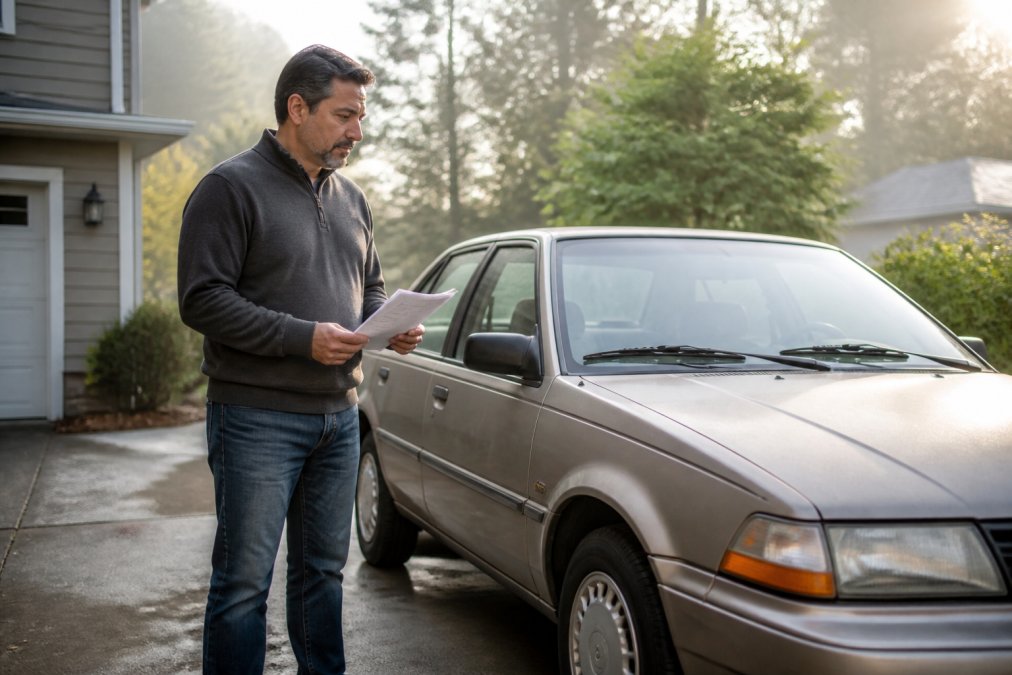
Dropping Collision Coverage on Older Cars: When It Makes Sense
Dropping collision coverage makes sense when your annual premium approaches a meaningful share of your car's actual cash value. A common rule of thumb: if collision and comprehensive together cost more than roughly 10% of the vehicle's value each year, it's worth running the numbers on dropping them.
Here's the trade-off in plain terms. Drop collision, and you pay for your own repairs after an at-fault accident. Keep it, and you pay every month whether you file a claim or not.
The Self-Insurance Math
Self-insuring means setting aside the money you would have spent on collision premiums and using it to cover repairs yourself. It works when three things line up:
- Your car's actual cash value is low enough that a total loss wouldn't wreck your finances
- You have cash on hand to cover a repair or replace the car outright
- You can absorb the risk without borrowing
Break-even months = (Deductible + Annual Premium) ÷ Monthly Premium Savings
Wait, that's not quite right. The real comparison is between what you pay for coverage and what you'd lose without it. Use this instead:
Since you can't know the probability, flip it: How many months of premiums equal your car's value?
Months to equal value = Actual Cash Value ÷ Monthly Premium
Worked example: A 2012 sedan with an actual cash value of $4,500.
Liability-Only Coverage for High-Mileage Daily Drivers
Liability-only coverage is the leanest standard option, and for high-mileage daily drivers it's often the most practical. These are the cars racking up commuter miles, not sitting in a garage under a cover. Their value depreciates fast, and their repair bills rarely justify comprehensive protection.
Classic Car Insurance Requirements: Who Qualifies and Who Doesn't
Classic car insurance requirements usually exclude the very vehicles most people assume it covers. Specialty and collector policies typically require a vehicle that's driven sparingly, stored securely, and valued as a collectible rather than a commuter. A 20-year-old sedan with 180,000 miles does not qualify.
Who typically qualifies:
- Vehicles old enough and rare enough to be considered collectible
- Cars kept in a garage and driven limited miles per year
- Vehicles in good or restored condition (Source: NHTSA's vehicle safety data)
Is Gap Insurance Worth It for Used Cars?
Gap insurance is worth it for used cars mainly when you financed the purchase and still owe more than the car is worth. It covers the difference between your loan balance and the vehicle's actual cash value if the car is totaled or stolen.
How Safety Features and Risk Assessment Affect Older Car Premiums
Safety features can lower premiums on older cars, but the effect is smaller than most drivers expect. Insurers run a risk assessment on every vehicle, weighing crash-test ratings, the cost of parts, theft rates, and repair difficulty. A backup camera or lane-assist system on a newer car carries more weight than an older vehicle's basic airbags.
The High-Mileage Daily Driver Gap
Many discussions about older car insurance focus on classics and collectibles. However, reliable, high-mileage daily commuters, such as 10-to-15-year-old sedans with significant mileage, also require careful consideration for insurance coverage.
- Annual mileage verification. Some carriers offer low-mileage discounts, but if you're logging 15,000+ miles per year, you won't qualify. Ask about pay-per-mile or usage-based programs instead.
- Anti-theft devices. A steering wheel lock or aftermarket alarm can earn a small discount, especially in high-theft areas. The effect is modest, typically a few percent, but it adds up.
- Dash cams. Some insurers may offer discounts for dash cams. Inquire about specific programs; not all carriers advertise this.
- Defensive driving courses. A mature-driver or defensive-driving course can reduce liability premiums, especially for drivers over 55.
- Bundling. Combining auto with home or renters coverage remains one of the most reliable ways to lower premiums, regardless of vehicle age.
What Doesn't Work
Retrofitting modern safety tech into an older car rarely lowers premiums. Adding a backup camera or blind-spot monitor to a 2008 sedan won't change your rate because insurers rate the vehicle's original safety profile, not aftermarket additions. The exception is anti-theft devices, which some carriers do recognize.
Legal Implications of Minimum Liability and Coverage Downgrades
Every state sets minimum liability requirements, and dropping below them is illegal, not just risky. Minimum liability typically splits into bodily injury liability and property damage liability, each with its own limit. Exact figures vary by state and change over time, so confirm the current numbers with your state's insurance regulator before adjusting anything.
Comparing Your Options at a Glance
| Option | What It Covers | Best For | Main Trade-Off |
|---|---|---|---|
| Full coverage | Your car plus liability | Newer, financed vehicles | Highest premium |
| Liability-only | Others' injuries and property | High-mileage daily drivers | No payout for your car |
| Drop collision only | Liability plus comprehensive | Low-value cars, theft risk | You pay for at-fault repairs |
| Self-insuring | Nothing, you hold the cash | Cars worth little, savings on hand | Full risk on you |
| Gap insurance | Loan-to-value shortfall | Recently financed used cars | Useless without collision |
| Collector policy | Agreed value for classics | Genuine collectibles | Strict eligibility |
Bringas Insurance handles auto, home, life, and business coverage under one roof, so you can review an older car's policy alongside the rest of your protection instead of piecing it together. A free quote takes the guesswork out of the comparison.
Frequently Asked Questions
Which insurance coverages are unnecessary for an older car?
Collision and comprehensive coverage often become unnecessary once your annual premium exceeds 10% of your car's actual cash value. For a vehicle worth $2,500 with a $500 deductible, a $600 annual premium for full coverage means you are paying $600 to protect at most $2,000 in value. Liability insurance remains required in nearly every state, so never drop that.
Is liability insurance cheaper on older cars?
Liability insurance premiums depend on your driving record, location, and coverage limits, not the age of your car. However, because you are not paying for collision or comprehensive coverage on an older vehicle, your total premium drops significantly. A liability-only policy removes the portion of your premium that protects the vehicle itself, which is where most of the savings come from.
Should I have full coverage on a 13-year-old car?
It depends on your car's actual cash value and your deductible. If your vehicle is worth $4,000 and your collision deductible is $1,000, the most you could receive after an accident is $3,000 minus depreciation. Compare that payout against what you would save annually by dropping collision coverage. If the annual savings exceed 10% of your car's value, liability-only often makes more financial sense.
What is the difference between standard and classic car insurance?
Standard car insurance uses actual cash value to settle total losses, meaning you receive the depreciated value of your vehicle. Classic car insurance uses agreed value, where you and the insurer settle on a fixed payout amount before any loss occurs. Classic policies also typically require limited mileage, secure storage, and a vehicle that is at least 10 to 25 years old depending on the insurer.
What happens if I drop to liability-only and then cause an accident?
Your liability coverage pays for the other driver's injuries and property damage up to your policy limits. Your own vehicle repairs become your out-of-pocket expense. If you carry only state minimum liability limits, a serious accident could leave you personally responsible for damages exceeding those limits. Review your coverage limits carefully before downgrading, and consider whether an umbrella policy fits your situation.
Deciding how much coverage an aging car deserves is a judgment call, and the right answer depends on your savings, your loan balance, and how much risk you can carry. Bringas Insurance offers comprehensive auto coverage, free quotes, and bilingual guidance for families weighing exactly this kind of decision. Get a free quote from Bringas Insurance and find the policy that fits your car, your budget, and your peace of mind.