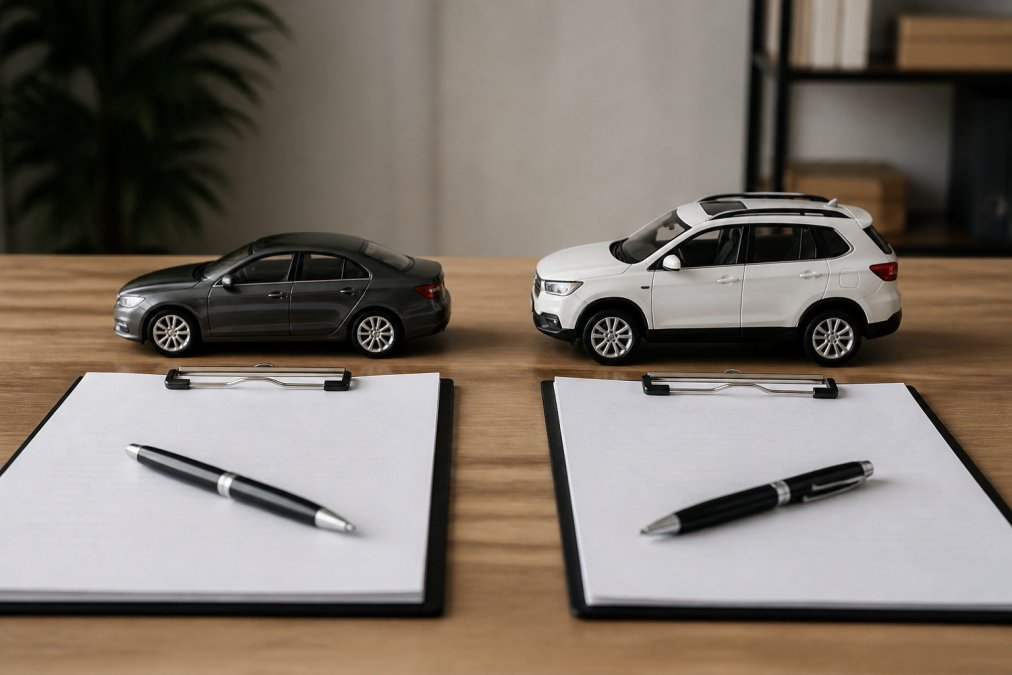
 comparison
Liability vs Full Coverage Insurance for Everett Drivers
Table of Contents
- Liability vs Full Coverage Insurance: A Quick Comparison
- Washington State Minimum Auto Insurance Requirements
- Is Full Coverage Mandatory in Washington?
- What Full Coverage Actually Covers (and What It Doesn't)
- Everett-Specific Driving Risks and the 'Gap' Insurance Intersection
- Is Gap Insurance Worth It for Used Cars?
- How to Choose the Right Auto Insurance Deductible
- Decision Matrix: When to Drop Full Coverage
- Frequently Asked Questions
Last Updated: September 17, 2026
Liability vs Full Coverage Insurance: A Quick Comparison
Liability vs full coverage insurance for Everett drivers comes down to one question: does your policy protect only the people you might harm, or does it also repair or replace your own vehicle? At Bringas Insurance, we walk Everett drivers through this decision every week, and the answer is rarely as simple as the price difference suggests. Liability coverage is the legal floor in Washington; full coverage is an optional layer that adds collision and comprehensive protection to your own car. This guide breaks down what each one pays for, what Washington actually requires, and how to decide which fits your vehicle, your budget, and your risk.
Liability insurance is coverage that pays for injuries and property damage you cause to others in an at-fault accident. It never pays a cent toward your own car, no matter how the crash happened.
Full coverage insurance is a combination policy that stacks collision and comprehensive coverage on top of liability, so your own vehicle is protected against crashes, theft, fire, and weather.
The table below summarizes the core differences before we unpack them.
| Feature | Liability Only | Full Coverage |
|---|---|---|
| Pays for other drivers' injuries | Yes | Yes |
| Pays for your vehicle's repairs | No | Yes |
| Required in Washington | Yes | No |
| Theft, fire, weather damage | No | Yes |
| Typical cost | Lower premium | Higher premium |
| Best for | Older, low-value cars | Newer, financed cars |
Washington State Minimum Auto Insurance Requirements
Washington law requires every driver to carry liability coverage at state-mandated minimums, and driving without it exposes you to fines, license suspension, and personal financial responsibility for any damage you cause. The state sets specific dollar limits for bodily injury liability and property damage liability, and those figures are updated periodically, so confirm the current amounts directly with the Washington State Office of the Insurance Commissioner before you renew. What does not change is the structure: liability only, with no collision or comprehensive component. If you finance or lease a vehicle, your lender will almost always require full coverage regardless of state minimums, because the car itself is their collateral.
Is Full Coverage Mandatory in Washington?
Full coverage is not mandatory in Washington. No state law requires collision or comprehensive coverage, so a driver who owns their car outright can legally insure it with liability only. The mandate comes from lenders, not legislators: lease agreements and auto loans typically contractually require full coverage until the vehicle is paid off. The practical consequence is that two drivers on the same Everett street can carry completely different policies and both be fully compliant. Legal compliance and financial protection are not the same thing, and that gap is where most costly mistakes happen.
What Full Coverage Actually Covers (and What It Doesn't)
Full coverage covers four things: liability for others, collision damage to your car, comprehensive damage from non-collision events, and typically uninsured or underinsured motorist protection if you add it. Collision coverage handles accidents regardless of fault. Comprehensive coverage handles theft, vandalism, fire, falling objects, and storm damage. What it does not cover is everything else people assume it does. Mechanical breakdown, routine maintenance, and wear items are excluded. Personal belongings stolen from the car usually fall outside the auto policy. And "full coverage" is a marketing shorthand, not a legal term, so the actual protection depends entirely on the policy limits and deductible you select.
Everett-Specific Driving Risks and the 'Gap' Insurance Intersection
Everett drivers face a specific combination of risks that makes the liability-versus-full-coverage decision sharper than it is in drier parts of the state. Persistent rain from fall through spring, dark winter commutes, and heavy commuter traffic on I-5 and US-2 raise the odds of a collision, and wet-road crashes are exactly the kind that damage your own vehicle. Add the marine-layer fog that settles over the waterfront and the Snohomish River valley, and you get morning visibility conditions that catch drivers off guard on the trestle and the Broadway on-ramps.
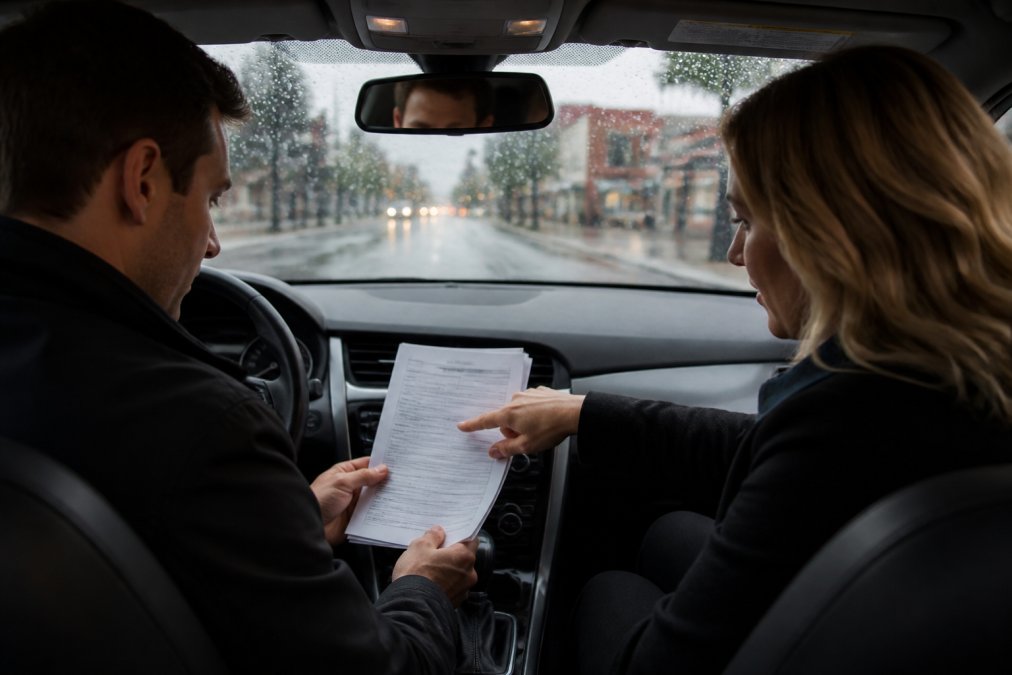
Those conditions matter for coverage because they shift the mix of claims. Collision claims spike when roads are slick, and comprehensive claims spike for a different reason: standing water, falling branches, and hail are all comprehensive events, not collision events. A driver who carries liability only absorbs every one of those repairs out of pocket, even when the crash was not their fault. That is the part of the local risk picture that generic state-level guides never connect to the coverage decision.
The bigger issue is the gap. If you finance a car and it is totaled, your insurer pays actual cash value, which is what the car was worth the moment before the crash, not what you paid and not what you still owe. New vehicles depreciate fastest in the first year, and a long loan keeps the balance high while the car's value drops.
If you are not sure whether you have a gap, the test is simple: pull your current loan payoff and compare it against your car's current market value. If the payoff is higher, you have a gap worth insuring. Bringas Insurance can run that comparison against your actual loan documents and your vehicle's current value, and we do it in Spanish or English, whichever your household prefers.
Is Gap Insurance Worth It for Used Cars?
Gap insurance is worth it for a used car only when you owe more than the vehicle is worth. That situation is more common than people expect, because vehicles depreciate fastest in the first few years and a long loan keeps the balance high. If you put a large down payment on a used car, or paid cash, gap coverage usually adds cost without adding protection.
How to Choose the Right Auto Insurance Deductible
- List your loan balance and your car's current market value
- Set a deductible you could pay in cash this month
- Confirm whether your lender requires full coverage
- Check whether you have uninsured motorist coverage
- Ask about gap coverage if you owe more than the car is worth
- Compare your deductible against your car's actual cash value, not just your premium
For a personalized read on your own numbers, the Insurance Information Institute's guidance on auto coverage offers a plain-language breakdown of how deductibles and limits interact. Bringas Insurance can run the same comparison against your actual vehicle, loan balance, and driving record, and we do it in Spanish or English, whichever your household prefers.
Decision Matrix: When to Drop Full Coverage
Drop full coverage when the annual premium approaches the payout you would actually receive. The standard benchmark: if your car's value is low enough that a total loss payout would be modest, and the premium for collision and comprehensive is a significant share of that value, the math stops working. The matrix below lays out the decision by vehicle age and value.
| Vehicle Situation | Owe More Than Value? | Recommended Coverage |
|---|---|---|
| New car, financed | Yes | Full coverage + gap |
| Used car under 5 years, financed | Often | Full coverage, review gap |
| Used car 6-10 years, owned outright | No | Liability + uninsured motorist |
| Older car, low value, owned outright | No | Liability only |
| Any car with high repair costs | Varies | Run the premium-vs-value math |
Frequently Asked Questions
Is it better to have full coverage or liability car insurance?
Full coverage is better if your car is worth more than a few thousand dollars or you have a loan or lease. Liability only pays for damage you cause to others; it does not repair your own vehicle. If your car is older and paid off, liability might be enough. Compare the annual premium difference against your car's actual cash value to decide.
What are the minimum car insurance requirements in Washington state?
Washington requires liability insurance at state-mandated minimums for bodily injury and property damage. You must also carry uninsured/underinsured motorist coverage unless you waive it in writing. These are state-mandated minimums; higher limits are often wise for asset protection.
At what point should I drop full coverage on an older vehicle?
Consider dropping full coverage when your annual premium becomes a significant portion of your car's actual cash value. If you cannot afford to replace the car out of pocket, keeping full coverage may be advisable. Consider your risk tolerance and savings.
Does liability insurance cover my own car if I cause an accident?
No. Liability insurance pays for the other driver's injuries and property damage when you are at fault. It does not repair your own vehicle. To cover your car, you need collision coverage (for accidents) and comprehensive coverage (for theft, weather, or vandalism). Those are included in what insurers call full coverage.
Is gap insurance worth it for used cars?
Gap insurance is worth it if you owe more on your loan than your car is worth and you cannot pay the difference out of pocket. This often happens with new cars that depreciate quickly, but it can also apply to used cars financed with little down. If you have positive equity or can cover a total loss gap yourself, skip it.
The hard part is not understanding liability versus full coverage. It is applying the math to your own car, your own loan, and your own budget without guessing. Bringas Insurance handles auto, home, life, and business coverage under one roof, offers free quotes with no pressure, and provides bilingual guidance for Everett families. Get a free quote from Bringas Insurance and get a straight answer on exactly which coverage your vehicle needs.