 ultimate-guide
Everett Car Insurance: What Drivers Need to Know in 2026
Table of Contents
- Why Everett Drivers Need More Than a State Minimum Policy
- Washington State Auto Insurance Requirements Explained
- What Actually Drives Your Everett Car Insurance Rate
- Independent vs Captive Insurance Agents: Who Works for You?
- How to Lower Car Insurance Premiums Without Dropping Coverage
- What Happens When You File a Claim in Everett
- Get Your Free Everett Car Insurance Quote
- Frequently Asked Questions
Last Updated: September 6, 2026
Shopping for Everett car insurance often starts with the same assumption: buy the cheapest state minimum policy and move on. That approach leaves most drivers exposed to financial risk that far outweighs the monthly savings.
The real question isn't just what insurance costs, but what happens when you need it. A minimum policy might satisfy the law, but it often falls short when medical bills or vehicle repairs pile up after a collision.
Why Everett Drivers Need More Than a State Minimum Policy
State minimum liability coverage exists to establish financial responsibility, not to protect your assets. If you cause an accident and the damages exceed your coverage limits, you personally owe the difference, which can mean wage garnishment or a lien on your home.
Medical costs alone can exhaust a minimum policy quickly, leaving you responsible for the remainder.
Drivers with higher coverage limits pay modestly more each month for substantially better protection.
Washington State Auto Insurance Requirements Explained
Washington law requires drivers to carry liability coverage, but the specific limits are set at the state level (insurance.wa.gov). The Washington State Office of the Insurance Commissioner publishes current minimum requirements, and those figures change periodically, so check the official source before you buy.
The coverage structure includes bodily injury liability, property damage liability, and uninsured motorist coverage in some circumstances, each with its own limit.
These minimums are floors, not recommendations, the lowest legal threshold, not the level that makes financial sense for your situation.
What Actually Drives Your Everett Car Insurance Rate
Insurance pricing comes down to risk assessment. Your driving history carries the most weight, followed by your age, vehicle type, and where you park it at night. But in Everett, the local picture is more specific than a generic list of rating factors.
ZIP code and neighborhood risk. Carriers price policies using territorial rating, which means your home address directly influences your rate. Drivers in 98201 (downtown and the waterfront) often see different rates than drivers in 98203 (south Everett) or 98208 (the Cascade View and Silver Lake areas). South Everett's denser commercial corridors and proximity to I-5 interchanges generate more fender-benders and theft claims, which pushes rates upward compared to quieter residential pockets. When you shop, ask your agent to run quotes using your garaging address versus a nearby alternative if you genuinely park your car at a different location most nights, but never misstate where you park, because that is misrepresentation and can void your claim.
Traffic patterns and commute exposure. Everett sits at the northern end of the Seattle metropolitan sprawl, and I-5 through the city is a daily chokepoint. The stretch between Marine View Drive and the US 2 interchange sees heavy congestion during both rush hours, and rear-end collisions are common there. If your daily commute takes you through that corridor, you are statistically more likely to file a claim than someone who drives a short local route. Your annual mileage and commute distance are rating factors, so be accurate when you report them. Underestimating your commute can backfire: if you crash on a route you did not disclose, the carrier may deny the claim or rescind the policy.
Weather and environmental exposure. Everett's location on Port Gardner Bay means marine air, fog, and rain are part of the driving reality for much of the year. Wet pavement increases collision frequency, and carriers factor regional weather patterns into their loss ratios. Vehicles parked on the street in low-lying areas near the Snohomish River delta face flood risk during king tides and heavy rain events, a comprehensive coverage consideration many drivers overlook.
Credit history and insurance scoring. Washington allows carriers to use credit-based insurance scores, and this factor can swing your premium by hundreds of dollars per year. Carriers have decades of data showing a statistical correlation between credit behavior and claim likelihood. A driver with a score in the low 600s might pay 40 to 60 percent more than a driver with a score above 750 (peer-reviewed research). Before you shop, pull your credit report from AnnualCreditReport.com and dispute any errors.
Vehicle-specific rating. The make and model you drive matters more than most Everett drivers realize. A 2024 electric SUV with advanced driver assistance features costs more to insure than a 2015 sedan with basic safety equipment, not because the EV is more dangerous but because repair costs and parts availability are higher. Conversely, older vehicles with high theft rates, certain Honda and Hyundai models from the 2010s, carry higher comprehensive premiums in areas with elevated theft statistics. If you drive one of those models, ask your agent about aftermarket immobilizer discounts or whether dropping comprehensive coverage makes financial sense given the vehicle's actual cash value.
What separates a good rate from a bad one in Everett is the combination of your garaging ZIP code, commute exposure, credit profile, and vehicle choice. An independent agent who writes across multiple carriers can show you how those factors play out differently from one company to the next.
Independent vs Captive Insurance Agents: Who Works for You?
A captive agent represents one insurance company and can only sell that carrier's policies, while an independent agency works with multiple providers to find coverage that fits your needs.
Rate comparison across carriers is the most direct way to lower your premium. When one carrier raises rates at renewal, an independent agent can move your policy to a different provider without you starting over.
Captive agents face pressure to retain policyholders even when rates climb, whereas independent agencies evaluate your coverage annually against the broader market.
How to Lower Car Insurance Premiums Without Dropping Coverage
Bundling your auto policy with home or renters insurance through the same provider typically earns a multi-policy discount, and paying your annual premium in one lump sum often costs less than monthly payments.
Raising your deductible is another lever, though it requires discipline. A higher deductible lowers your premium because you assume more risk upfront, but only choose this if you have savings to cover the amount.
Review your coverage limits annually. As your vehicle depreciates, you may be paying for more coverage than you need. Conversely, if you've added a teen driver or started a longer commute, your risk profile has changed and your policy should reflect that.
| Strategy | How It Helps | Best For |
|---|---|---|
| Bundle auto + home | Multi-policy discount | Homeowners and renters |
| Raise deductible | Lower monthly premium | Drivers with savings |
| Drop collision on old cars | Eliminate unnecessary cost | Vehicles worth under deductible |
| Annual policy review | Catch coverage gaps | All drivers |
What Happens When You File a Claim in Everett
The claims process in Everett follows a standard sequence, but the details matter more than the broad strokes. Here is what happens, step by step, and where most drivers make mistakes.
Step 1: Secure the scene and call law enforcement. If the accident involves injury, death, or property damage over a certain threshold, Washington law requires you to stop and remain at the scene. Call 911 for injuries; for property damage only, call the Everett Police Department's non-emergency line or the Washington State Patrol if the accident is on I-5 or a state highway. A police report creates an official record that carriers use to establish fault.
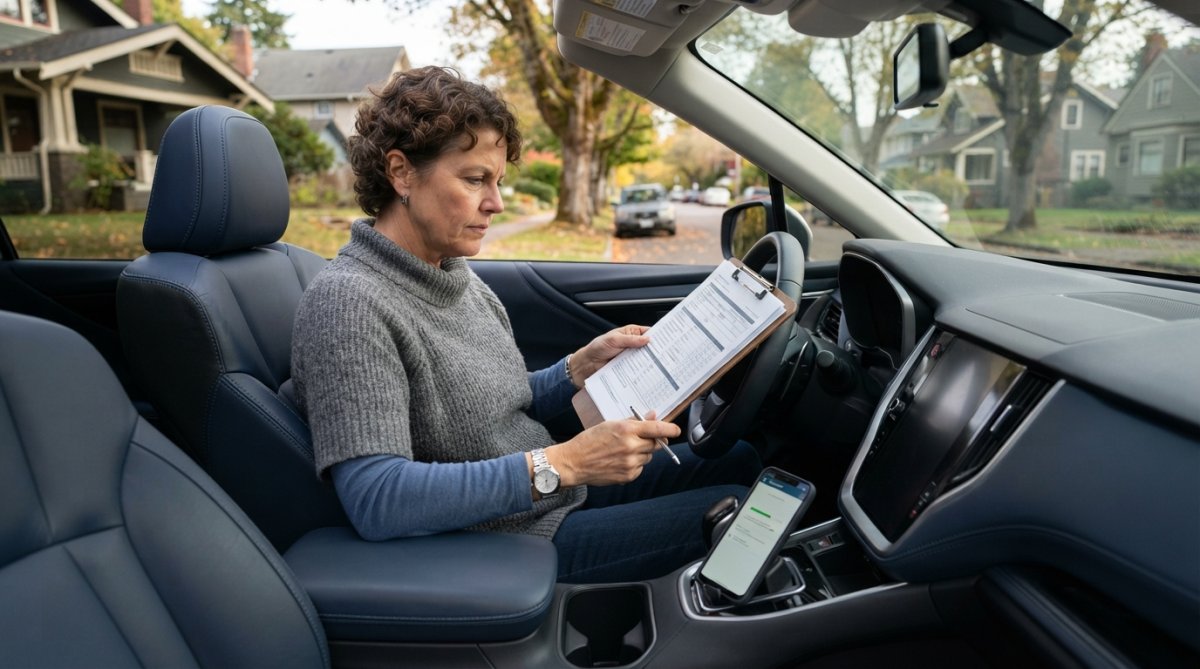
Step 2: Document everything before you call your carrier. This step determines how smoothly your claim proceeds. Take photos of both vehicles from multiple angles, including close-ups of damage and wide shots showing skid marks, traffic signals, road conditions, and weather. Photograph the other driver's license plate and insurance card. Get witness contact information. Do not discuss fault or make statements like "I didn't see you", those words end up in the police report and can be used against you.
Step 3: Report the claim to your carrier or agent. Most carriers accept claims by phone, mobile app, or online portal. If you bought through an independent agency, your agent can file the claim on your behalf. Have your policy number, police report number, and documentation ready. The claims representative will ask for a recorded statement, you are contractually obligated to cooperate, but not to speculate about fault or admit liability.
Step 4: The adjuster's inspection and damage assessment. The carrier assigns an adjuster who reviews the police report, photographs, and repair estimates. You have the right to choose where your vehicle is repaired; Washington law prohibits carriers from steering you to a specific shop. If the adjuster's initial estimate is lower than the body shop's quote, the shop can submit a supplement, this is normal when hidden damage is discovered during disassembly.
Step 5: Settlement and repair. Once liability is determined and damages are assessed, the carrier issues payment. If the accident is not your fault, the at-fault driver's liability coverage pays for your repairs up to their policy limits. If they are uninsured or underinsured, your own uninsured motorist (UM) coverage kicks in, but only if you purchased it.
Why uninsured motorist coverage is non-negotiable in Everett. Washington has a meaningful population of uninsured drivers on the road. If a driver without insurance hits you, your collision coverage pays to repair your vehicle (minus your deductible), but your medical bills and lost wages are only covered if you carry UM coverage. State law requires insurers to offer UM coverage, but you can reject it in writing (apps.leg.wa.gov). Rejecting it to save a few dollars per month is one of the worst financial decisions a driver can make, a single accident with an uninsured driver can leave you with tens of thousands of dollars in out-of-pocket medical costs.
How long does the process take? A straightforward claim with clear liability and minimal injuries can resolve in one to two weeks. Claims involving disputed fault, significant injuries, or uninsured drivers can take months. The biggest variable is documentation: the more complete your evidence at the scene, the faster the adjuster can make a determination. The second is communication, respond promptly to adjuster calls and requests.
If your policy includes rental reimbursement, it typically covers a rental car for a set number of days while your vehicle is being repaired. Without it, you are paying for a rental out of pocket, a gap you can close for a few dollars per month.
Get Your Free Everett Car Insurance Quote
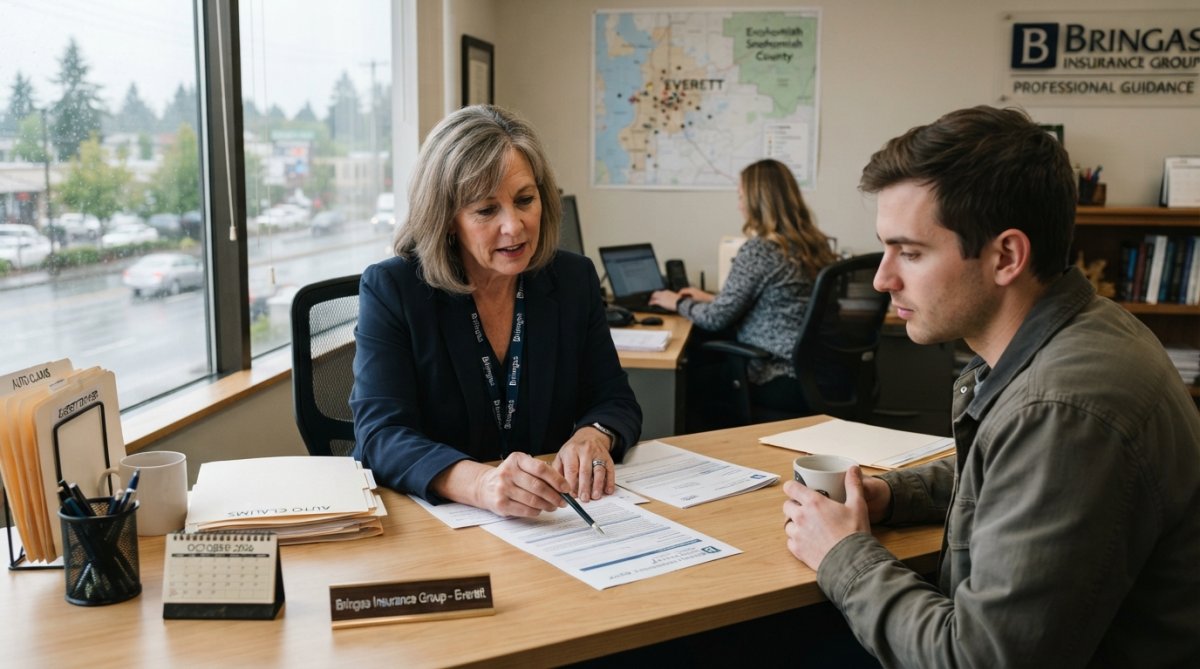
Bringas Insurance provides comprehensive insurance solutions for auto, home, life, and business coverage. Whether you need to insure a daily commuter, a classic car, or a rental property, our team is dedicated to finding the right policy for your unique needs.
Requesting a quote takes minutes, and you'll work directly with an agent who explains your coverage options in plain language. We serve Hispanic families in Everett with bilingual guidance and handle the rate comparison so you don't have to call five different companies yourself.
Ready to see what your Everett car insurance should actually cost? Get a free quote from Bringas Insurance and compare your current premium against what an independent agency can offer.
Frequently Asked Questions
What are the minimum car insurance requirements in Washington state?
Washington state requires drivers to carry liability coverage that meets specific minimum limits for bodily injury and property damage. You must also carry personal injury protection (PIP). An independent agent in Everett can explain the current limits and help you understand why minimum coverage may leave you exposed if you cause a serious accident. Going beyond state minimums is often worth the additional cost.
How do local insurance agents in Everett provide better service than national call centers?
A local Everett agent can help you understand your coverage needs, whereas a national call center typically represents one company. When you call a local agent, you speak with someone who understands the area. If you file a claim or need to adjust your policy, you may have a direct contact who can assist you throughout the process.
How can I bundle my auto and home insurance in Everett?
Bundling means buying your auto and home or renters policy from the same provider. Most carriers offer a multi-policy discount that lowers your total premium. An independent agent can compare bundled rates across several insurers to confirm that your discount actually results in the lowest combined price. Bringas Insurance can review your current policies to see if switching to a bundle saves you money.
Does my credit score affect my car insurance premiums in Washington?
In Washington, insurers may use credit-based insurance scores to help set premiums. A history of on-time payments can work in your favor, while issues like collections could lead to higher rates. Not every carrier weighs credit the same way. An independent agent can shop your profile across multiple companies to find one that treats your credit history fairly.