 comparison
Local Insurance Agents vs Online: Key Benefits
Table of Contents
- Local Insurance Agents vs Online: A Quick Comparison
- Independent Insurance Agent vs Captive Agent: What's the Difference?
- Where Local Agents Win: Coverage Advice, Claims, and Long-Term Value
- Where Online Insurance Wins: Speed, Price Transparency, and Self-Service
- Insurance Claims Assistance From Local Agents: What It Looks Like in Practice
- How to Find the Best Car Insurance in Everett
- The Hybrid Approach: Using Online Tools and a Local Agent Together
- Frequently Asked Questions
Last Updated: September 17, 2026
Local Insurance Agents vs Online: A Quick Comparison
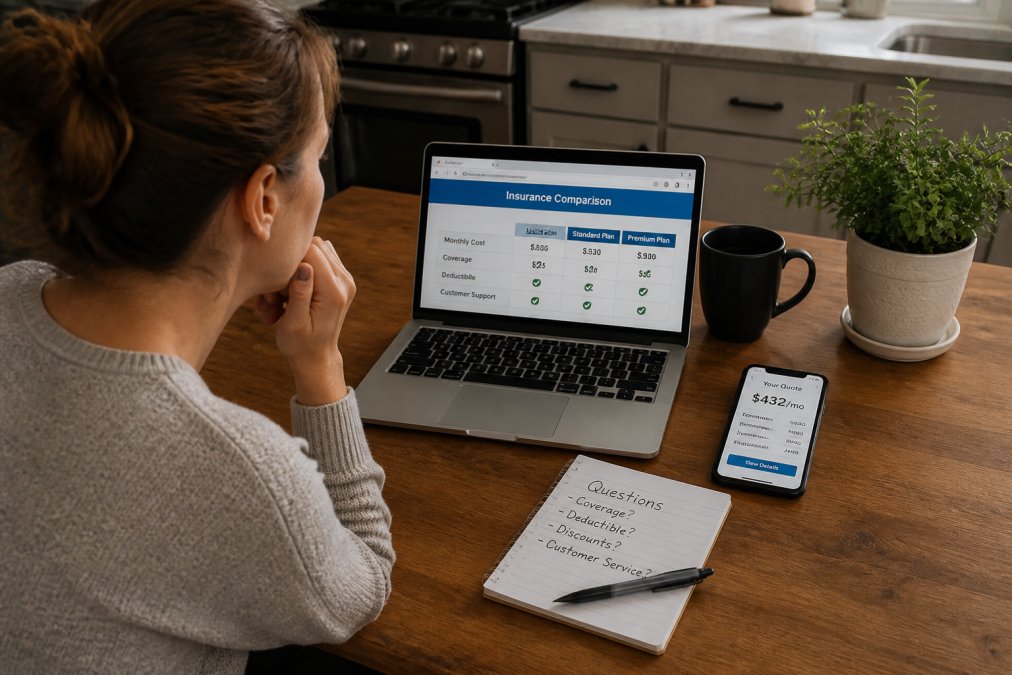
Choosing between local insurance agents and online platforms comes down to one trade-off: speed versus guidance. Online tools deliver quotes in minutes, but local insurance agents explain what those quotes cover, catch gaps, and stand beside you when you file a claim. This guide from Bringas Insurance breaks down where each wins and how to combine both.
| Factor | Local Insurance Agent | Online Platform |
|---|---|---|
| Speed to a quote | Same day, often within hours | Minutes |
| Price transparency | Quotes compared across carriers | Instant displayed rates |
| Coverage advice | Personalized, gap-focused | Self-guided, generic |
| Claims help | Direct advocacy and follow-up | Call center or app |
| Best for | Families, landlords, complex needs | Simple, single-policy shoppers |
Independent Insurance Agent vs Captive Agent: What's the Difference?
An independent insurance agent represents multiple insurance carriers and can shop your policy across them. A captive agent works for one carrier only, so their recommendation is limited to that company's products.
Where Local Agents Win: Coverage Advice, Claims, and Long-Term Value
The strongest case for local insurance agents is not price. It is that they read the fine print so you do not have to, and they stay in your corner when something goes wrong.
Coverage Gaps and Policy Customization
Most coverage problems are not about paying too much. They are about gaps nobody flagged. A standard homeowners policy may cap or exclude certain categories, and a landlord policy works differently again. An agent runs an insurance needs analysis: they review your home, vehicles, rental property, or business, then match limits and deductibles to your actual exposure.
Claims Assistance and Advocacy After a Loss
Filing a claim is where the difference becomes obvious. With a direct-to-consumer platform, you file through an app or call center and wait. With a local agent, you have a named person who knows your policy, explains the process, and pushes back when a decision seems wrong.
Where Online Insurance Wins: Speed, Price Transparency, and Self-Service
Online insurance platforms are genuinely good at three things: they are fast, they show you a number immediately, and they let you manage everything yourself without a phone call.
Insurance Claims Assistance From Local Agents: What It Looks Like in Practice
Insurance claims assistance from a local agent means having a single point of contact who documents the loss, explains your coverage limits, and communicates with the carrier until the claim resolves. The value becomes concrete when you walk through what happens after a loss.
A Realistic Claims Scenario
Consider a common pattern: a homeowner files a water-damage claim after a supply line fails behind a washing machine. The online portal routes it to a call center adjuster handling dozens of files. The first offer covers the visible flooring but denies the damaged cabinetry as 'pre-existing wear.' The homeowner, who has never read the policy exclusions, accepts because arguing with a call center feels futile.
What the Workflow Looks Like Step by Step
- You call your agent first, not the carrier's hotline
- The agent reviews your policy and confirms what is covered before you file
- They help you document the damage with photos, receipts, and third-party reports
- They file correctly the first time, which reduces the chance of a denial on technical grounds
- They follow up with the assigned adjuster and update you on progress
- If a decision seems inconsistent with your policy, they challenge it in writing and, when warranted, invoke the appraisal clause or request a re-inspection
That last step is the one people remember. An agent who knows your file can point to the exact policy language supporting your claim. A call center representative reading a script usually cannot.
Why the Timeline Matters
Most carriers must acknowledge a claim within a set number of days and pay or deny within a defined window after proof of loss. Those deadlines are easy to miss when a file sits in a queue. An agent who knows them can flag when a carrier is dragging and escalate before the window closes.
Post-Purchase Maintenance: The Part Online Platforms Skip
Claims advocacy is reactive; the more valuable work is proactive. A good agent reviews your portfolio once a year, updates it when you buy a car, finish a renovation, or add a rental property, and adjusts coverage before a gap becomes a problem. Online platforms rarely prompt that review because their model is built around the initial transaction, not the ongoing relationship.
How to Find the Best Car Insurance in Everett
Finding the best car insurance in Everett starts with comparing quotes from multiple carriers through an independent agent, then checking that coverage limits match how you actually drive.
Here is a practical checklist:
- Confirm the agency is independent and can quote several carriers
- Ask for a side-by-side premium comparison, not a single quote
- Check that coverage limits reflect your assets, not just the state minimum
- Ask how claims are handled and who your contact will be
- Confirm the agency can also review your home, renters, or business policies
- Ask whether bilingual support is available if you need it
The Hybrid Approach: Using Online Tools and a Local Agent Together
The hybrid approach means using online tools for research and a local agent for decisions, getting you the speed of digital quoting and the protection of professional guidance. In practice it is a specific sequence, and the sequence matters.
Stage 1: Research Online (Days 1-2)
Start with the direct-to-consumer quote engines. Pull three to five quotes for the coverage you think you need, and write down the premium, deductible, and liability limit for each. Do not bind anything yet. The goal is calibration: know the rough market range before you talk to anyone.
Stage 2: Bring the Numbers to an Independent Agent (Days 2-5)
Take your saved quotes to an independent agent and ask two questions: can you match or beat this premium, and what does this quote leave out? An agent with binding authority and access to multiple carriers can often match the online price while fixing the coverage gaps it left open. If they cannot beat it, they should explain why, which carrier is pricing your risk more aggressively, and whether that carrier's claims reputation justifies the difference.
Stage 3: Bind Through the Agent, Manage Through the Portal (Ongoing)
Here is the part most hybrid articles miss: modern local agents are not 'old school.' Many independent agencies now offer client portals and mobile apps where you can download ID cards, view policy documents, request a certificate of insurance, and submit a change request without a phone call. You get digital convenience plus a named human for the decisions that matter.
Stage 4: Annual Review and Life-Event Adjustments
The hybrid model only pays off if you keep the relationship active. Schedule a review once a year, and call your agent when something changes: a new car, a marriage, a move, a renovation, a new business, a child turning 16. Each event changes your exposure, and most online platforms will not prompt you to update coverage.
Where the Hybrid Model Falls Short
It is not free. You will spend more time upfront than a single online purchase. For a very simple policy, one car, one driver, no other assets, the online-only route is genuinely adequate. The hybrid model earns its keep when your situation has any complexity: multiple policies, a home and a vehicle, a rental, a business, or assets worth protecting beyond the state minimum.
Frequently Asked Questions
Is it better to buy insurance online or through a local agent?
It depends on what you need. Online platforms work well for simple policies where you already know your coverage limits and want a fast quote. A local insurance agent helps when your situation is more complex, such as bundling home and auto, insuring a rental property, or reviewing your policy for coverage gaps. Local agents also provide claims advocacy when something goes wrong, which online-only options typically do not.
Do independent insurance agents charge extra fees for their services?
In most cases, no. Independent insurance agents are typically paid through commissions from the insurance carriers they represent, not through fees charged to you. That means the premium you pay is generally the same whether you buy directly from a carrier or through a local agent. Always ask upfront if any fees apply to your specific policy so there are no surprises.
How does a local agent help during the insurance claims process?
A local agent acts as your advocate after a loss. They help you file the claim correctly, document damage, and communicate with the insurance carrier's adjuster. If a claim is delayed or partially denied, your agent can push back and explain your policy's coverage limits. This kind of insurance claims assistance from local agents is one of the clearest advantages over direct-to-consumer platforms, where you handle everything yourself.
Is there a downside to using an online insurance comparison site?
Online comparison sites are fast and show price transparency across carriers, but they often miss the details that affect your actual coverage. Quotes may not account for local risk factors, bundled policies, or coverage gaps specific to your situation. You also lose the long-term relationship and personalized advice a local agent provides. Use comparison sites as a starting point, then talk to an agent before binding coverage.
What is the difference between an independent insurance agent and a captive agent?
An independent insurance agent works with multiple insurance carriers and can compare premium quotes across them to find coverage that fits your needs. A captive agent works for one carrier only and can sell just that company's insurance products. Independent agents offer more policy customization options and broader access to an insurance marketplace, while captive agents may have deeper knowledge of one carrier's specific offerings.
Choosing coverage is a long-term decision, and the wrong policy only reveals itself at claim time, when it is too late to fix. Bringas Insurance helps Everett-area families and business owners compare carriers, close coverage gaps, and get real claims support when it counts. Request a free quote and get a policy review that covers your auto, home, life, and business needs in one place.