 how-to
How to Prevent Water Damage in Older Homes: 2026 Guide
Table of Contents
- Signs of Water Damage in Old Houses
- How to Check for Plumbing Leaks in Old Homes
- Foundation, Basement, and Crawl Space Water Prevention
- Roof, Gutter, and Drainage Maintenance for Water Damage Prevention
- Sealing Windows, Doors, and Managing Indoor Humidity
- Smart Leak Detection and DIY vs Professional Thresholds
- Homeowners Insurance Water Damage Coverage for Older Homes
- Frequently Asked Questions
Last Updated: October 1, 2026
Signs of Water Damage in Old Houses
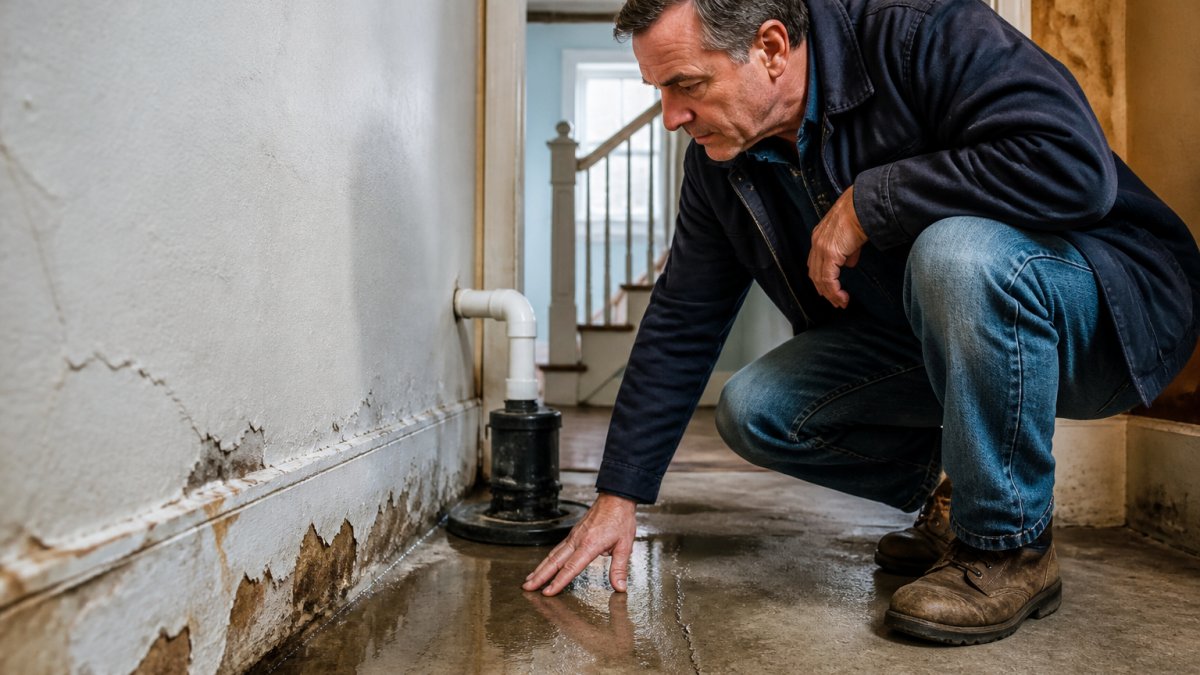
Water damage in older homes rarely announces itself. It shows up as a faint stain on a ceiling, a musty smell in the basement, or a soft spot in the floor that wasn't there last year. Learning how to prevent water damage in older homes starts with knowing what early warning signs look like, because in an old house, by the time you see standing water, the repair bill has already grown.
Watch for these signs:
- Brown or yellow rings on ceilings and walls
- A musty or damp smell in the basement or crawl space
- Paint that bubbles, peels, or feels soft
- Warped baseboards or swollen door frames
- Rising water bills with no change in usage
- Damp spots on the floor near appliances
How to Check for Plumbing Leaks in Old Homes
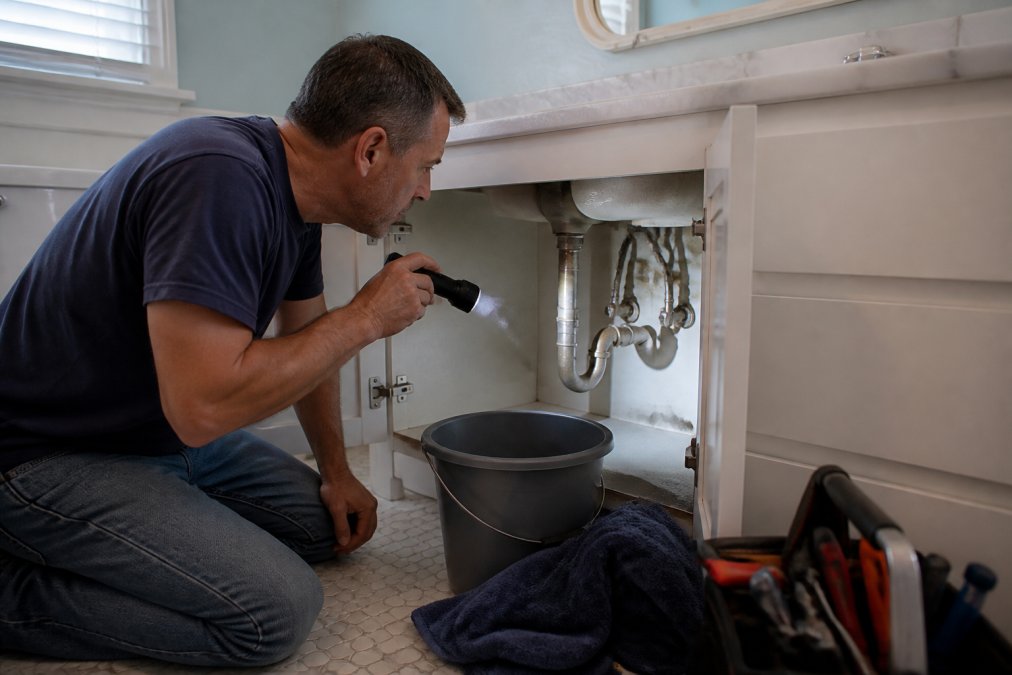
Checking for plumbing leaks in an old home means inspecting the places water travels: under sinks, behind toilets, near the water heater, and along any exposed supply lines. Older plumbing often uses materials that corrode or crack over time, so a monthly walkthrough catches problems while they are still cheap to fix.
Here is a simple routine:
- Turn off all faucets and appliances that use water.
- Read your water meter, wait an hour, then read it again. If it moved, you have a leak.
- Check under every sink for damp cabinet floors or water stains.
- Look at the base of the water heater for rust or moisture.
- Inspect exposed pipes in the basement for corrosion, drips, or green staining.
Foundation, Basement, and Crawl Space Water Prevention
Foundation and basement water problems usually come from outside, not inside. Water pools against the house, seeps through cracks, and finds its way into the crawl space. The fix is often about moving water away from the structure before it ever touches the foundation.
Start with these steps:
- Check for foundation cracks and seal small ones with hydraulic cement or a masonry sealant.
- Make sure the ground slopes away from the house, not toward it.
- Keep gutters and downspouts clear so water discharges several feet from the foundation.
- Install a sump pump in the basement or crawl space if you get standing water.
- Lay a moisture barrier over a dirt crawl space floor.
Roof, Gutter, and Drainage Maintenance for Water Damage Prevention
Roof and gutter upkeep is the cheapest water damage prevention you can do. A clogged gutter sends water straight down the side of the house and into the foundation. Missing shingles let water into the attic, where it soaks insulation and framing before you notice.
Schedule this twice a year:
- Clear leaves and debris from gutters and downspouts
- Check flashing around chimneys, vents, and skylights
- Look for cracked, curling, or missing roof shingles
- Confirm downspouts direct water at least 3 to 4 feet from the foundation
- Inspect the attic after heavy rain for stains or damp insulation
Sealing Windows, Doors, and Managing Indoor Humidity
Air leaks around windows and doors let in both water and humid air. Re-caulking and weatherstripping are simple weekend jobs that keep a watertight seal and lower your energy bills at the same time.
Do this each fall:
- Re-caulk around window and door frames where the seal has cracked
- Replace worn weatherstripping
- Seal gaps where pipes and wires enter the house
- Run a dehumidifier in the basement to keep humidity in check
- Use exhaust fans in bathrooms and kitchens
Smart Leak Detection and DIY vs Professional Thresholds
Smart leak detection has changed the math on older homes. Instead of waiting for a ceiling stain, you can place a battery-powered sensor puck under the water heater, behind the washing machine, beneath the kitchen sink, and beside the sump pit. When moisture touches the contacts, the sensor sends a push alert to your phone. More advanced systems pair a sensor with a motorized ball valve on the main line, so the valve closes automatically when a leak is detected, useful when a supply line fails while you are at work.
A few practical notes for old houses:
- Place sensors on the floor, not on a shelf, water pools low first.
- Put one inside the cabinet under every sink, not just the main bathroom.
- Add one near the water heater and one behind the washing machine.
- If you have a crawl space, a single sensor on the dirt floor near the lowest point catches seepage early.
- Test each sensor with a damp paper towel every few months; batteries and contacts fail quietly.
When to DIY and When to Call a Pro
Most small fixes are within reach of a careful homeowner. The line is not about difficulty, it is about what happens if you get it wrong.
| Situation | DIY or Pro | Why |
|---|---|---|
| Dripping faucet, running toilet | DIY | Replace the cartridge, flapper, or fill valve |
| Re-caulking windows, doors, tub surrounds | DIY | Low risk, low cost, reversible |
| Slow drain or minor clog | DIY | Plunger or hand snake usually clears it |
| Replacing a supply line under a sink | DIY | Shut off the angle stop first; use braided stainless |
| Hidden leak inside a wall or ceiling | Pro | Needs moisture meter, thermal camera, or acoustic detection |
| Foundation crack with active seepage | Pro | Structural and drainage assessment required |
| Sewage backup or standing water | Pro | Category 3 water, health hazard, needs extraction and disinfection |
| Any leak near knob-and-tube or aluminum wiring | Pro | Shock and fire risk; call a licensed electrician, not a plumber |
Two Old-House Hazards That Change the Rules
Plaster hides water longer than drywall. A gypsum wallboard leak usually shows a stain within a day. Plaster over wood lath can absorb moisture for weeks before the surface discolors, and by then the lath behind it may already be rotting. If you smell mustiness near a plaster wall with no visible stain, treat it as a leak until proven otherwise.
Smart sensors do not stop leaks. They shorten the time between the leak starting and you finding out, and in an older home, that gap is what decides whether you are patching a pipe or replacing a floor.
Homeowners Insurance Water Damage Coverage for Older Homes
The difference between a covered claim and a denied one usually comes down to one phrase in the policy, sudden and accidental versus gradual seepage or repeated leakage.
What Standard Policies Usually Cover
- Burst supply line or frozen pipe that splits: often covered, including the resulting water damage to floors, ceilings, and drywall.
- Appliance failure (water heater, washing machine hose, dishwasher): often covered for the resulting damage, though the appliance itself may be excluded.
- Accidental overflow (tub, sink, toilet): usually covered.
- Roof leak from a storm event: coverage depends on whether the damage is from the storm or from deferred maintenance.
What They Usually Do Not Cover
- Long-term seepage, rot, or mold from a leak you should have caught: commonly denied as maintenance-related.
- Flooding from outside the home, rising water, storm surge, surface runoff: requires a separate flood policy. Standard homeowners policies exclude flood.
- Sewer or drain backup: almost always requires a separate endorsement. Ask your agent to add it; it is inexpensive relative to the damage it covers.
- Cracks from settling or hydrostatic pressure: typically treated as a maintenance issue, not a covered loss.
How Preventative Maintenance Affects Your Coverage
This is the part older-home owners miss. Insurers do not just price the risk, they underwrite it. When you apply for or renew coverage on an older home, the carrier may ask about:
- Roof age. Many carriers will not write a new policy on a roof past a certain age, or will require an inspection.
- Plumbing material. Galvanized steel, polybutylene, and older copper with a history of pinhole leaks raise flags.
- Wiring type. Knob-and-tube or aluminum wiring can make a home harder to insure, and water intrusion near that wiring compounds the concern.
- Prior claims. A history of water claims, even small ones, can affect your premium or eligibility.
Do not assume your policy covers every water event. Flood damage from outside your home is almost never included in a standard policy, and older homes near creeks, rivers, or low-lying areas are the most exposed. Sewer backup is a separate endorsement most homeowners never add until after the first backup.
Questions to Ask Your Agent Before You Need to File
- Does my policy cover gradual seepage, or only sudden and accidental discharge?
- Is sewer backup included, or do I need an endorsement?
- Is there a separate mold sublimit, and how low is it?
- Does the roof age or plumbing material affect my renewal?
- What documentation do you want on file to support a future claim?
This is where a local agent earns their keep. At Bringas Insurance, we review the age and condition of your home and explain exactly what your policy covers before you need it. The National Association of Insurance Commissioners homeowner resources offers a plain-language guide to what standard policies include and exclude.
Frequently Asked Questions
What is the most common cause of water damage in houses?
The most common causes are plumbing supply line failures, water heater leaks, and roof or foundation seepage. In older homes, aging galvanized pipes and failing fittings are frequent culprits. Washing machine hoses and dishwasher supply lines also fail over time. Regular inspections and replacing old components before they fail are the best prevention strategies.
Does standard homeowners insurance cover water damage from pipe bursts?
Most standard homeowners insurance policies cover sudden and accidental water damage from pipe bursts, including the resulting damage to walls, floors, and belongings. However, damage from gradual leaks or poor maintenance is typically excluded. Review your policy carefully and ask your agent about specific exclusions for older plumbing systems.
How often should I inspect my roof and gutters to prevent leaks?
Inspect your roof and gutters at least twice a year, ideally in spring and fall. After severe storms, check for missing shingles, damaged flashing, and clogged downspouts. Older homes with original roofing materials need more frequent checks. Keeping gutters clear and ensuring proper drainage away from the foundation prevents water intrusion and costly repairs.
What should I do if I discover water damage in my home?
First, shut off the water supply if the source is a leak. Document the damage with photos and contact your insurance company promptly. Remove standing water and begin drying the area to prevent mold growth. For significant damage, call a licensed water damage restoration professional. Keep all receipts and records for your claim.