 How-to
How to Tell if Detached Structures Are Covered by Dwelling Insurance
Last Updated: November 13, 2026
Quick Summary
Usually no. Dwelling coverage generally protects the main house and structures physically attached to it, while detached structures such as sheds, fences, and freestanding garages are normally covered under a separate part of the policy called other structures coverage. Check your policy language to confirm.
- Dwelling coverage (Coverage A) protects the main home and attached structures like garages and decks.
- Other structures coverage (Coverage B) handles detached buildings and features on the property.
- A common default for Coverage B is 10% of the Coverage A dwelling limit, shared across all detached structures.
- Some policies apply lower sublimits to fences, pools, or business-use structures, so read that section.
- Flood damage to detached structures is excluded on standard homeowners forms and needs separate coverage.
Table of Contents
- What Dwelling Coverage Includes and Where It Stops
- How Dwelling Coverage Differs From Other Structures Coverage
- How to Classify a Structure as Attached or Detached
- Other Structures Coverage Examples: Garages, Sheds, Fences and Gazebos
- Do I Need Other Structures Coverage?
- What Happens If Dwelling Coverage Is Insufficient
- Checking Your Declarations Page and Booking a Policy Review
- Frequently Asked Questions
What Dwelling Coverage Includes and Where It Stops
Dwelling coverage is the part of a homeowners policy that pays to repair or rebuild your house. Many homeowners assume that every building on their lot falls under the same protection, but that is often not the case. (Source: National Association of Insurance Commissioners)
The short answer to "does dwelling coverage include detached structures" is usually no. For a fuller picture of what this part of the policy covers, read a homeowner's guide to what dwelling coverage includes.
Dwelling coverage generally includes:
- The main house walls, roof, and foundation
- Attached garages and attached decks
- Built-in fixtures like wiring, plumbing, and permanently installed cabinets
Dwelling coverage generally does not include:
- Sheds, fences, and gazebos on separate parts of the lot
- Freestanding garages
- Items you keep inside the home, which fall under personal property coverage
Insurers often set dwelling limits based on the cost to rebuild your home. Confirm that figure on your declarations page, because it shapes how much room you have for everything else.
How Dwelling Coverage Differs From Other Structures Coverage
Dwelling coverage (Coverage A) protects the home itself. Other structures coverage (Coverage B) protects buildings and features on the property that are not attached to the house.
Here is the practical difference. If a storm destroys your attached garage, Coverage A typically responds. If the same storm knocks down a detached shed, the claim usually goes to Coverage B, which has its own dollar limit.
How the Percentage Limit Actually Works
Coverage B is usually expressed as a percentage of the Coverage A dwelling limit, and 10% is a common default. The math is simple, but the consequence is not:
- $300,000 dwelling limit × 10% = $30,000 for other structures
- $500,000 dwelling limit × 10% = $50,000 for other structures
- $800,000 dwelling limit × 10% = $80,000 for other structures
That percentage is a ceiling on the total payout for all detached structures combined, not a per-building allowance. If you have a detached garage, a shed, a fence, and a gazebo, every dollar paid for those items draws from the same Coverage B bucket.
Whether the default percentage is enough depends on what your detached structures would cost to rebuild, so compare the limit against a realistic rebuild estimate for each building.
When Replacement Cost Exceeds the Limit
If a covered loss destroys a detached structure and the repair or rebuild estimate exceeds your Coverage B limit, the policy generally pays up to the limit and you absorb the difference.
Watch out: some policies apply a separate, lower sublimit to certain categories, fences, pools, or structures used for business, so the headline Coverage B number may overstate what is actually available for a given building.
Other Differences Worth Checking
Coverage A and Coverage B can also diverge on:
- Covered causes of loss. Both are typically open-peril on an HO-3 form, but named-peril forms (HO-2) list what is covered, and the lists can differ.
- Deductibles. Some policies apply a separate percentage deductible for wind or hail that hits both coverages, which matters most when a single storm damages the house and outbuildings together.
- Ordinance or law coverage. Rebuilding an older detached structure to current code may cost more than the structure's pre-loss value, and that gap is often excluded unless endorsed.
Read both sections of the policy rather than relying on a general summary, and confirm the Coverage B limit and any sublimits in writing with your agent.
The two coverages differ in what they protect, how their limits are set, and which causes of loss they respond to.
| Coverage | What it protects | How the limit is set |
|---|---|---|
| Dwelling (Coverage A) | The main home and attached structures | Set on the declarations page |
| Other structures (Coverage B) | Detached buildings and features on the property | Often 10% of the Coverage A limit |
| Fences, pools, business-use structures | Detached features that may carry lower sublimits | Sublimit can be lower than the headline Coverage B total |
| Flood damage to detached structures | Water rising from the ground | Excluded from standard homeowners forms |
How to Classify a Structure as Attached or Detached
Classification depends mainly on physical connection. A structure is usually treated as attached if it shares a wall, roof, or other structural element with the house. A structure is usually detached if it stands on its own with no structural link.
Insurers may look at several factors:
- Does the building share a roof line or wall with the home?
- Is there an enclosed connection, such as a breezeway or covered walkway?
- Is the structure built on the same foundation as the house?
Be careful with breezeways. A roofed passage that connects a garage to the house may change the classification. Your insurer's definition controls, so ask for it in writing if the situation is unclear.
A Simple Decision Tree for Borderline Structures
Use these questions in order:
- Does the structure touch the house wall or roof? If yes, it is likely attached and falls under dwelling coverage.
- Is there a covered passage or breezeway linking it to the home? If yes, check with your insurer, since many treat this as attached.
- Does it stand alone with no shared foundation? If yes, it is likely detached and falls under other structures coverage.
- Is it a fence, pool, or gazebo? These are usually detached features under other structures coverage. (Source: Consumer Financial Protection Bureau)
If you are still unsure after working through this, contact your insurance agent before a loss happens.
Other Structures Coverage Examples: Garages, Sheds, Fences and Gazebos
Detached garages are one of the most common sources of confusion. A freestanding garage on the back of the lot typically falls under other structures coverage, not dwelling coverage. Its replacement cost can be significant, so confirm that your Coverage B limit fits before a loss happens.
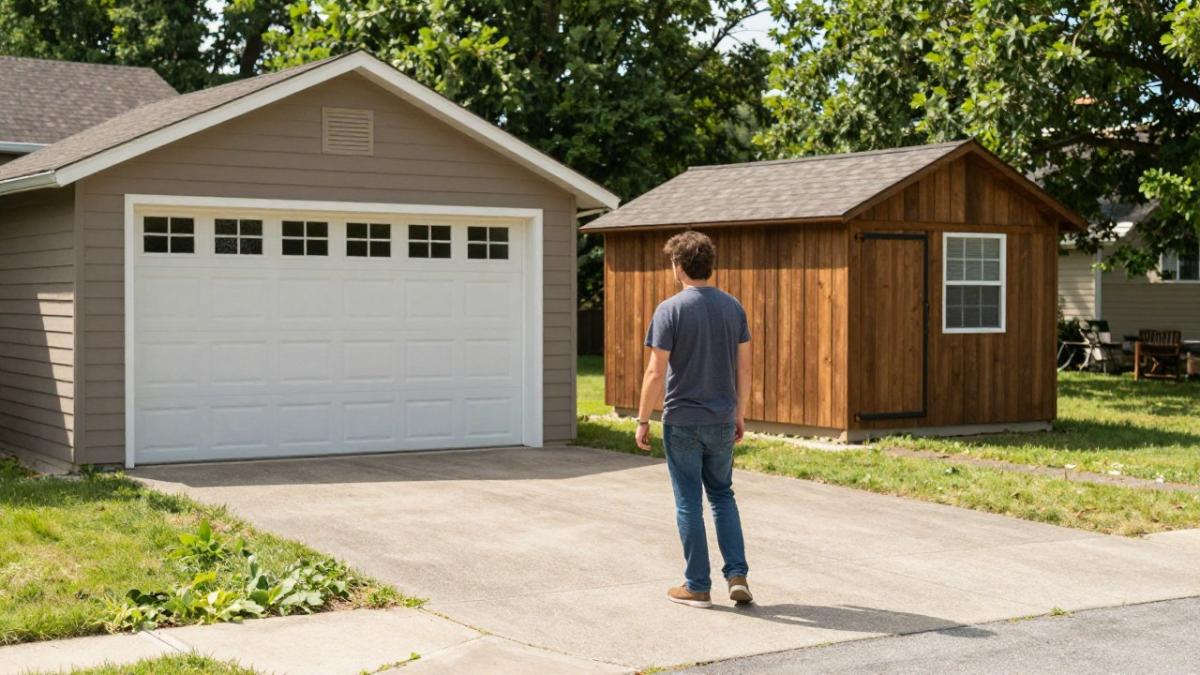
Sheds, fences, and gazebos follow the same pattern. A storm that flattens a fence or tears the roof off a garden shed is usually a Coverage B claim.
How the Cause of Loss Changes the Answer
The same detached garage can be covered for one event and excluded for another:
- Fire or lightning. Generally covered under both Coverage A and Coverage B on standard forms, subject to the limit.
- Wind and hail. Generally covered, but a separate percentage wind/hail deductible may apply, and cosmetic damage exclusions on some policies can affect metal roofs and siding.
- Falling objects and weight of ice or snow. Commonly covered on open-peril forms; a gazebo collapsing under snow load is usually a covered peril unless the policy excludes it or the collapse resulted from neglected maintenance.
Business Use and Vacancy Can Change Coverage
A detached structure used for a home business, a workshop, a studio, or a rental unit, may fall outside the standard homeowner's definition of 'other structures' or may be subject to a lower sublimit. Similarly, a detached structure that has been vacant or unoccupied for an extended period may lose coverage for certain perils such as vandalism. If a detached building generates income or sits empty, tell your insurer rather than assuming the standard policy responds.
A Claims and Documentation Walkthrough
When a detached structure is damaged, the steps that protect your claim are straightforward but easy to skip:
- Photograph the damage before you move anything. Wide shots of the structure in context, then close-ups of the damage, then photos of any contents you intend to claim.
- Pull your declarations page and note the Coverage A limit, the Coverage B limit, and any sublimits or endorsements that mention fences, pools, or outbuildings.
- Contact your insurer promptly and describe the cause of loss in plain terms, wind, fallen tree, fire, because the cause drives which coverage and deductible apply.
- Get written repair estimates from at least one contractor, and keep receipts for any emergency mitigation such as tarping a roof or removing a fallen tree from the structure.
- Keep a claim log with dates, names, and what was discussed, and ask the adjuster to confirm in writing which coverage, A or B, is being applied.
Keep receipts for emergency tree removal and tarping costs, and ask the adjuster how those costs will be handled before you assume they are fully reimbursed.
Quick Reference Examples
- Detached garage damaged by fallen tree: typically other structures coverage, subject to the covered peril and the Coverage B limit.
- Backyard shed destroyed in a windstorm: typically other structures coverage; check the wind/hail deductible.
- Fence knocked down by a vehicle: often covered, though some policies have limits or specific wording for fences.
Because definitions, sublimits, and exclusions vary by policy form and insurer, treat these examples as a starting point and verify the specifics in your own policy before relying on them.
Do I Need Other Structures Coverage?
If you own any detached building or feature with significant value, you should consider whether your Coverage B limit is enough. Many homeowners never look at this number until they file a claim.
Ask yourself a few questions:
- How much would it cost to rebuild every detached structure on the lot?
- Do you run a business or rent out a detached building?
- Are any of the structures valuable, such as a workshop with tools or a finished guest house?
If the answers point to meaningful exposure, you may want a higher Coverage B limit. Some insurers also offer endorsements for specific high-value structures. Ask your agent about options before you need them.
What Happens If Dwelling Coverage Is Insufficient
If your dwelling limit is too low to rebuild the house, you may pay the gap yourself. This is called being underinsured.
Underinsurance also affects other structures. If your Coverage B limit is small and a large detached building is destroyed, you may have to cover the difference out of pocket.
Also note that dwelling and other structures coverage are not a substitute for liability protection.
Checking Your Declarations Page and Booking a Policy Review
Your declarations page lists your dwelling limit, other structures limit, deductibles, and key endorsements. Pull it out and look for the Coverage A and Coverage B amounts. Compare them to the real replacement cost of your home and any detached buildings.
If the numbers look unclear, or if you have added a shed, workshop, or rental building since you bought the policy, schedule a policy review. A review with Bringas Insurance can help you go through your declarations page and decide whether your limits fit your property. Get a free quote from Bringas Insurance to compare coverage options for your home and detached structures.
Frequently Asked Questions
What does dwelling coverage not cover?
Dwelling coverage generally applies to the main house and structures physically connected to it, such as an attached garage or a covered porch. It typically does not cover detached buildings and features on the property, including detached garages, sheds, fences, gazebos and in-ground swimming pools. Those are usually handled under other structures coverage, which is a separate part of a standard homeowners policy. Coverage also excludes certain causes of loss, such as flood and earth movement, regardless of structure type. Review your declarations page and policy language to confirm exactly what your policy excludes.
Is a detached garage covered in a dwelling policy?
Usually not. A detached garage is not physically connected to the main home, so most standard homeowners policies place it under other structures coverage rather than dwelling coverage. This means the garage has its own coverage limit, which is often set as a percentage of dwelling coverage. Some insurers allow the garage to be connected by a breezeway or roof to be treated as attached, so the details of the connection matter. Check your policy language and ask your insurer how a garage like yours is classified.
What is considered a separate structure for insurance?
A separate structure is a building or feature on the property that is not attached to the main dwelling. Examples include detached garages, sheds, barns, fences, gazebos, guest houses and outbuildings. These items fall under other structures coverage in most standard policies. Because the rules and definitions can vary by insurer and policy form, read the definitions section of your policy and confirm with your insurance company whether a specific structure is covered and at what limit.