 How-to
What Happens If Dwelling Coverage Is Insufficient
Last Updated: November 20, 2026
Quick Summary
If dwelling coverage is insufficient, you pay the gap between your insurer's payout and the actual cost to repair or rebuild your home. Coinsurance clauses can also shrink claim payments proportionally, even on small losses. Keeping your dwelling limit near the full cost to rebuild helps avoid these out-of-pocket costs.
- Dwelling coverage pays for the structure of your home, such as walls, roof, floors, and foundation.
- Set your dwelling limit to match the cost to rebuild, not the market value or purchase price.
- Many policies include an 80% rule that requires coverage of at least 80% of replacement cost.
- Use the formula: (coverage carried divided by coverage required) times the loss, to estimate the payout.
- Review your dwelling limit every year, since rebuild costs rise with labor and materials.
Table of Contents
- What Dwelling Coverage Protects and Why Its Limit Matters
- How Dwelling Coverage Differs From Market Value and Purchase Price
- How to Calculate Dwelling Coverage Based on Replacement Cost
- How Much Dwelling Coverage Do I Need for My Home
- The 80% Rule and How Coinsurance Penalties Reduce Claim Payouts
- Extended Replacement Cost Coverage as a Safeguard
- Reviewing and Fixing Your Dwelling Coverage Before a Loss
- Frequently Asked Questions
What Dwelling Coverage Protects and Why Its Limit Matters
Dwelling coverage is the part of a homeowners insurance policy that pays to repair or rebuild the structure of your home. If a fire or storm damages your house, this is the coverage that pays for the bricks and boards, not your furniture. Read a plain-language guide to dwelling coverage basics.
The dwelling limit is the most money your insurer will pay for that structural damage. Set it too low, and the gap between your payout and your actual repair bill comes straight out of your pocket.
What dwelling coverage typically includes:
- Roof, walls, and foundation
- Built-in appliances and fixtures
- Attached structures like a garage or porch
Bringas Insurance helps homeowners review their dwelling limits so the number on the policy matches the real cost to rebuild. Request a free quote to get started.
How Dwelling Coverage Differs From Market Value and Purchase Price
Many homeowners confuse dwelling coverage with what their house sells for. Compare dwelling and personal property coverage side by side.
Market value reflects what a buyer would pay for the house and the land it sits on.
Dwelling coverage should match the cost to rebuild your home at today's prices.
Key point: A home that sells for $450,000 may cost far less to rebuild, because the land accounts for much of that price.
How to Calculate Dwelling Coverage Based on Replacement Cost
This is the amount it would take to rebuild your home with similar materials and quality, at current prices.
Steps to estimate replacement cost:
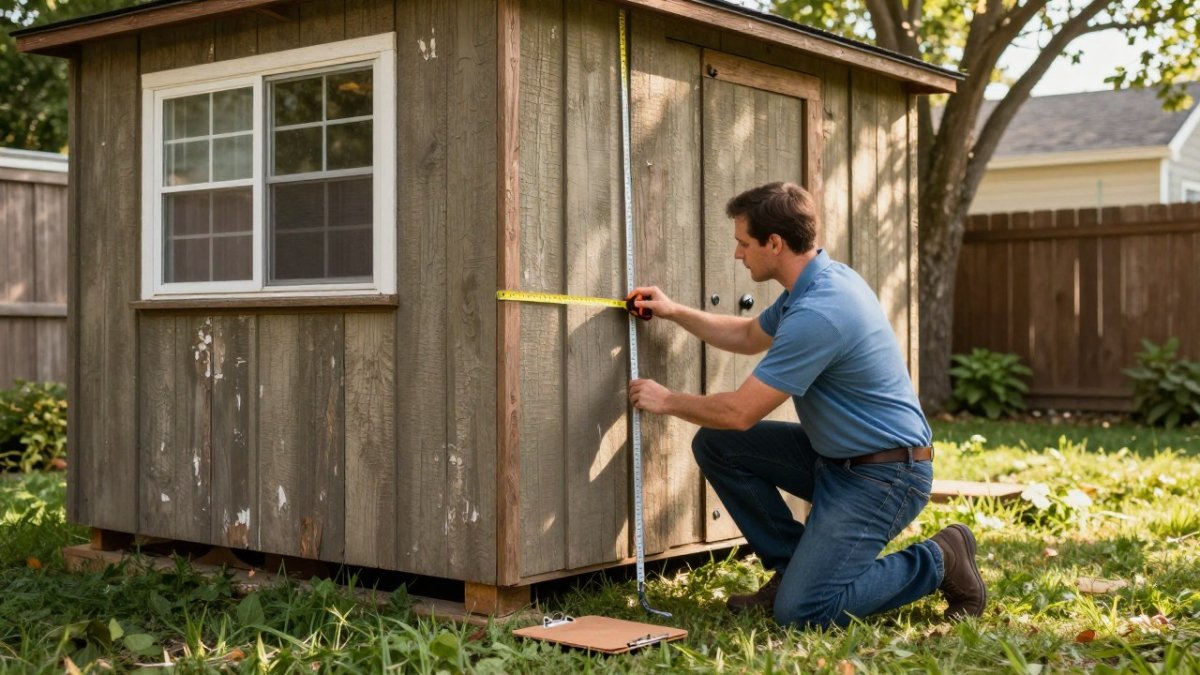
- Measure your home's total square footage
- Find the local construction cost per square foot
- Multiply the two numbers
- Add extra for custom features like stone work or a finished basement
A common approach is to ask your insurer for a replacement cost estimate. Many insurers offer online calculators. A licensed agent can also help you compare the estimate with local rebuild costs.
Watch out: Rebuild costs rise over time with labor and materials. Review your estimate every year, not just when you first buy the policy. See practical ways to lower premiums while fixing your coverage.
How Much Dwelling Coverage Do I Need for My Home
For most homeowners, the right dwelling limit equals the full cost to rebuild the home, not its market value. Insuring to that level protects you if a total loss happens.
Here is a simple check:
- If your limit matches the rebuild estimate, you are covered for a total loss
- If your limit is lower, you will pay the difference out of pocket
- If your limit is higher, you may be paying premiums for coverage you do not need
Your agent can run the numbers with you. Ask Bringas Insurance directly whether a Spanish-speaking agent is available to explain each option.
The 80% Rule and How Coinsurance Penalties Reduce Claim Payouts
Many standard homeowners policies include a coinsurance clause, often called the 80% rule. It requires you to carry dwelling coverage equal to at least 80% of your home's replacement cost. If you carry less, the insurer may reduce your claim payment, even for a small loss, because you were paying premium for only a fraction of the risk.
The penalty is not a flat denial. It is a proportional reduction. The insurer compares the limit you actually carry with the limit you should have carried (80% of replacement cost), then pays only the ratio you carried. The formula most policies use is:
(Coverage carried ÷ Coverage required) × Loss = Payout
That ratio is applied to the covered loss, not to the policy limit. So a modest roof claim can still be trimmed if your limit is below the threshold.
A Worked Example of a Partial Loss Shortfall
Suppose your home would cost $400,000 to rebuild. Your policy carries $280,000 of dwelling coverage, which is 70% of replacement cost. The 80% threshold is $320,000, so you are $40,000 short.
A storm causes $50,000 in roof and wall damage. The insurer applies the coinsurance ratio:
- Coverage carried ÷ required coverage = $280,000 ÷ $320,000 = 87.5%
- Payout before deductible = $50,000 × 87.5% = $43,750
- Your share of the loss = $50,000 − $43,750 = $6,250
Then your deductible applies. If your deductible is $2,500, the check is $41,250 and your total out-of-pocket is $8,750, $6,250 from the coinsurance penalty plus the $2,500 deductible. The penalty and the deductible stack; the deductible does not absorb the coinsurance shortfall.
A Worked Example of a Total Loss Shortfall
A total loss is where underinsurance becomes catastrophic. Using the same home, $400,000 rebuild cost, $280,000 limit, a fire destroys the structure. The insurer pays the limit of $280,000, minus the deductible. You are left to fund the remaining $120,000 of rebuild cost, plus the deductible, plus any costs the policy does not cover (debris removal over the sublimit, code upgrades, temporary housing beyond the ALE limit).
Why the 80% Threshold Is Not Universal
Coinsurance provisions and their percentages vary by policy form and state, so the threshold in your policy may differ from 80%.
Watch out: A policy marketed as "replacement cost" can still contain a coinsurance clause. Replacement-cost settlement and coinsurance are separate provisions, and a policy can have both.
The article works through how a shortfall plays out on a partial loss and on a total loss, so the key numbers are worth scanning side by side.
| Scenario | Figure | Result |
|---|---|---|
| Rebuild cost (worked example) | $400,000 | Replacement cost used in the example |
| Dwelling coverage carried | $280,000 | 70% of replacement cost |
| 80% threshold | $320,000 | $40,000 short of the threshold |
| Partial loss (storm damage) | $50,000 | Coinsurance ratio is 87.5% |
| Payout before deductible | $43,750 | Ratio applied to the loss |
| Total loss payout | $280,000 minus deductible | Remainder falls on the homeowner |
Extended Replacement Cost Coverage as a Safeguard
Extended replacement cost coverage can pay more than your dwelling limit if rebuilding costs spike after a disaster.
Guaranteed replacement cost goes further. Explore alternatives for high-value homes. It pays the full cost to rebuild, even if that exceeds the limit.
These endorsements are not standard on every policy, so ask your agent whether they are available and what they cost.
Reviewing and Fixing Your Dwelling Coverage Before a Loss
The best time to fix an underinsured policy is before you file a claim. Once a loss happens, your options narrow quickly: you cannot retroactively raise a limit to cover damage that has already occurred, and a coinsurance penalty is calculated on the limit in force on the date of loss.

Annual Coverage Review Checklist
- Compare your dwelling limit with a current rebuild estimate, not the estimate from when you bought the policy
- Confirm the limit is at least 80% of replacement cost, or higher if your policy uses a different coinsurance percentage
- Check for coinsurance language on your declarations page and in the loss-settlement section of the policy form
What to Do Immediately If You Discover You Are Underinsured
A practical sequence, in order:
- Call your insurer or agent and request a coverage review in writing. Ask for the current replacement-cost estimate the insurer is using and the date it was calculated.
- Request a new replacement-cost estimate based on current local costs. Ask which estimating tool your insurer uses. Ask which tool was used and what assumptions it made about square footage, quality grade, and features.
- Review your endorsements. Confirm whether you have extended replacement cost (often 25% to 50% above the limit) or guaranteed replacement cost, and what each costs.
- Raise the dwelling limit and confirm the new premium in writing before the next renewal if possible.
- Document the change, the date, the new limit, the estimate it was based on, and the premium difference.
How to Challenge an Inaccurate Rebuild Estimate
If the insurer's rebuild estimate looks too low, you have the right to question it before you accept it. A common pattern is that automated estimators undercount custom features, finished basements, code-required upgrades, and demolition or debris-removal costs.
- Get the calculation in writing. Ask for the line-item estimate, not just the total.
- Compare with local contractor quotes. Two or three written rebuild estimates from licensed local contractors give you a defensible benchmark.
- Identify omitted costs. Check whether the estimate includes demolition, debris removal, permits, architect or engineering fees, and code-required upgrades such as electrical, plumbing, or energy-code changes triggered by a rebuild.
Watch out: A rebuild estimate that excludes code upgrades and debris removal can look adequate on paper while leaving a real shortfall at claim time, because those costs are often subject to separate sublimits rather than the dwelling limit.
Costs Beyond Rebuilding the Structure
Dwelling coverage is not the only number that matters. A total loss typically triggers costs the structure limit may not fully absorb:
- Debris removal, often subject to a sublimit (commonly a percentage of the dwelling limit) rather than the full limit
- Building-code upgrades, ordinance or law coverage is frequently a separate endorsement or sublimit; without it, code-required upgrades may not be paid
- Permits, architect, and engineering fees, sometimes inside the dwelling limit, sometimes separate
Ask your agent to confirm, in writing, which of these sit inside the dwelling limit and which have their own sublimits. A policy with an adequate dwelling limit but thin ordinance-or-law and ALE limits can still leave a large out-of-pocket gap after a total loss.
Partial Loss Versus Total Loss
Underinsurance affects both, but differently. On a partial loss, the coinsurance ratio trims the payout proportionally, the worked example above shows a $6,250 penalty on a $50,000 claim. On a total loss, the limit itself is the binding constraint: the insurer pays the limit (minus deductible), and you fund the rest of the rebuild.
If you discover a gap, act before renewal and get the change confirmed in writing. Contact Bringas Insurance to discuss your dwelling limit, endorsements, and sublimits.
Frequently Asked Questions
What happens if my insurance coverage is not enough?
If your dwelling limit is below what it would cost to rebuild your home, you absorb the difference after a total loss. On a partial loss, many policies with a coinsurance clause reduce your payout proportionally when the limit is below a set percentage of replacement cost, commonly 80%. You would pay the gap out of pocket, along with your deductible. Ask your agent to show the coinsurance language in your policy and compare your limit to a current rebuild estimate.
Is extended replacement cost coverage worth it?
Extended replacement cost coverage pays above your dwelling limit, usually up to a stated percentage such as 25% or 50% more, when rebuilding costs rise after a major loss. It is most useful when construction costs spike after a regional disaster or when your home has unusual materials or features. Availability and limits vary by insurer and state, so confirm the exact terms in your policy and with your insurance company before you rely on it.
What does dwelling coverage not cover?
Dwelling coverage protects the structure of your home, including walls, roof, floors, and attached structures. It does not cover personal property, which falls under separate contents coverage, and it generally does not cover land, landscaping, or the value of the lot. Some damage, such as flood or earthquake damage, is typically excluded from standard homeowners policies and requires separate coverage. Review your policy's exclusions list to confirm what applies to your property.
How do I calculate the replacement cost of my home?
Replacement cost is the estimated cost to rebuild your home with similar materials and quality at today's construction prices. It is not the same as market value, which includes land and buyer demand. Start with a rebuild estimate from your insurer or a licensed local builder, then compare it against your current dwelling limit. Rebuild costs depend on square footage, materials, labor rates, and local demand, so update your estimate regularly as those factors change.