 How-to
How to Calculate Replacement Cost for High-Value Jewelry
Last Updated: November 19, 2026
Quick Summary
To learn how to calculate replacement cost for high-value jewelry, find what it would cost to buy a similar piece today at retail, not what you originally paid. Build the estimate from current metal and stone prices, labor, and taxes, then confirm it with a professional appraisal.
- Replacement cost reflects today's retail price, not the purchase price from years ago.
- Calculate metal value by multiplying the spot price per gram by the purity factor and the metal weight.
- Price stones at current retail listings matched on carat, cut, color, and clarity.
- Use a receipt, appraisal, or jeweler's scale to establish weights rather than total item weight.
- Review valuations at least once a year and after major life events or market moves.
Table of Contents
- Why Replacement Cost Matters for Jewelry Coverage
- Retail Replacement Value vs Fair Market Value
- Gathering the Documents and Details You Need
- Step-by-Step: Calculating Replacement Cost
- Using a Jewelry Appraisal for Insurance Purposes
- Resale Value and Why It Differs From Replacement Cost
- Replacing Rare, Vintage, or Discontinued Pieces
- Keeping Your Jewelry Valuation Current With Bringas Insurance
- Frequently Asked Questions
Why Replacement Cost Matters for Jewelry Coverage
For anyone asking how to calculate replacement cost for high-value jewelry, the starting point is the amount it would take to buy a similar piece of jewelry today, at retail. Readers who want to see how underinsurance can leave valuable assets underprotected can read Is Flood Insurance Worth It in Snohomish County?.
Many policyholders assume their coverage will pay what they originally spent. That is often not how it works. Coverage for scheduled jewelry is usually tied to an appraised value, and that value has to match current market prices to be useful.
Here is what matters most:
- Replacement cost reflects today's retail price, not the purchase price from years ago.
- Gold and platinum prices change, so metal value can shift over time.
- Diamond and gemstone prices depend on size, cut, color, and clarity.
- An outdated appraisal can leave a gap you only discover after a loss.
Watch out: Do not assume a family heirloom is covered at its sentimental worth. Insurers generally pay based on value, not history.
Retail Replacement Value vs Fair Market Value
Replacement value and fair market value are not the same thing. Replacement value is what it would cost to buy an equivalent item new at retail. Fair market value is the price a willing buyer would pay a willing seller, and it is often lower.
For jewelry insurance, replacement value is usually the figure that matters. A piece bought at a retail store may be worth far less on the resale market, even though it would cost the full retail amount to replace. Confusing the two can leave you underinsured. Because replacement value depends on having coverage that reflects what it would cost to replace the piece, choosing the right insurance is essential to protecting valuable heirlooms.
Gathering the Documents and Details You Need
Before you calculate anything, assemble a file that describes each piece precisely enough for an appraiser to work from and for an insurer to defend. Renters can explore renters insurance in Washington for personal belongings to confirm whether personal property coverage will reimburse the replacement cost you have calculated. A complete file shortens the appraisal, reduces the chance of a disputed description, and gives you a record to compare against future appraisals.
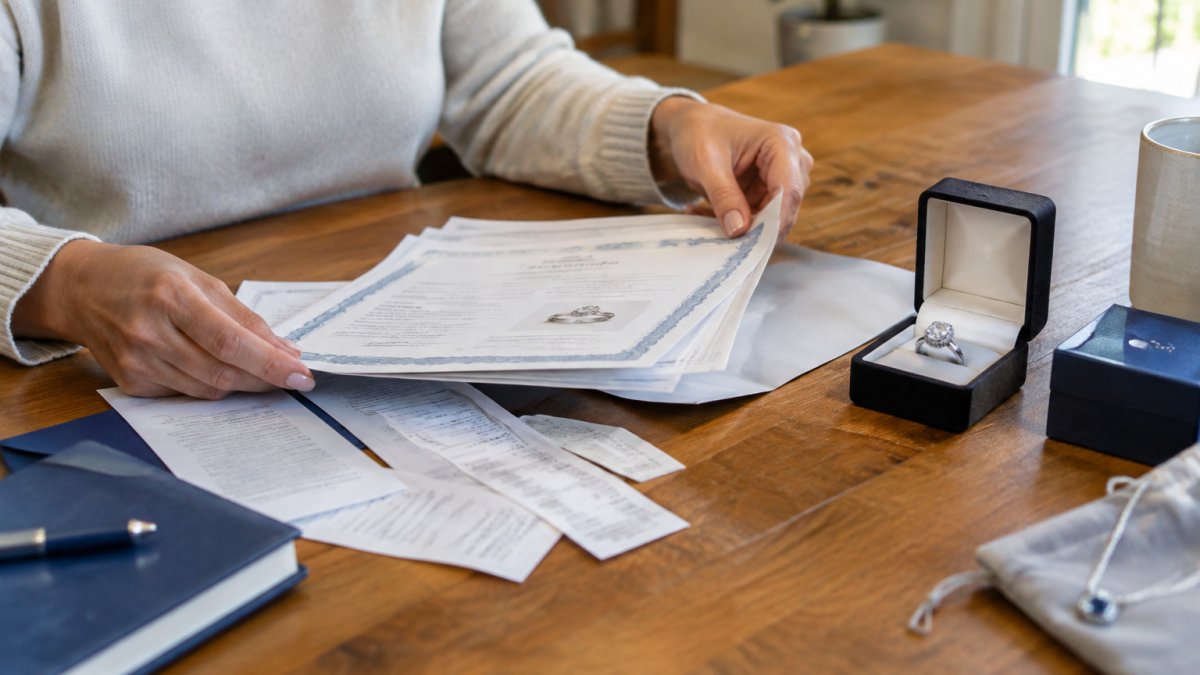
!Hands sorting appraisal certificates, receipts and a jewelry box on a wooden kitchen table
Gather these items for every high-value piece:
- Original receipts or bills of sale, including the date and the retailer
- Any prior appraisal certificates, with the appraisal date and the appraiser's credentials
- Grading reports for diamonds or colored gemstones, including the laboratory and report number
- Photographs from several angles, plus close-ups of hallmarks, maker's marks, and any engraving
- Measurements: stone carat weights or millimeter dimensions, metal weight, ring size, and chain length
- A written description of the design, including custom work, modifications, and any replaced stones
- Repair and service records, which document changes to the piece since purchase
Keep these records somewhere safe and separate from the jewelry itself, such as a fireproof box or a secure digital copy with a backup.
Preparing the File Before an Appraisal
Organize the file so the appraiser can move quickly. Put the most recent appraisal on top, followed by grading reports, then receipts and photographs. Write a one-page summary for each item that lists the metal, stones, weights, and any known history. If a stone was replaced or a setting was modified, note the date and the jeweler. This preparation is the difference between an appraisal that describes the piece accurately and one that relies on guesswork.
Comparing Appraisals and Spotting Weak Values
When you receive an appraisal, compare it against your file and ask concrete questions. A strong appraisal states the valuation date, defines the value as replacement cost at retail, describes the item in enough detail to identify it, and identifies the comparable retail market used. Ask the appraiser which retail channel the comparables came from, whether the stone prices reflect current listings, and whether labor and tax are included.
Watch out: An appraisal that states only a total value without item details, a valuation date, and a defined market is hard to defend and hard to update. Ask for the underlying description and comparables before you accept the figure.
Step-by-Step: Calculating Replacement Cost
You can build a working estimate yourself before a professional appraisal. The goal is not to replace the appraiser; it is to arrive at the appraisal conversation with a defensible number and a clear list of assumptions. Follow these steps in order and write down every input so you can update the estimate later.
- Inventory each piece. Record the item type, metal and purity, stone count and approximate weights, setting style, and any brand or maker's mark. Photograph each item on a plain background with a ruler for scale.
- Establish the metal value. Look up the current spot price for the metal, convert it to a per-gram price for the stated purity, and multiply by the metal weight. For example, 14-karat gold is 58.3% fine gold, so its per-gram value is the spot price per gram multiplied by 0.583. Use the metal weight from a receipt, appraisal, or a jeweler's scale, not the total item weight.
- Price the stones at retail. For diamonds, match carat weight, cut, color, and clarity, then use current retail listings from reputable dealers rather than wholesale price sheets. For colored stones, match species, treatment status, and origin where known. A stone with a grading report is easier to price because the characteristics are fixed.
- Add setting, labor, and design. Mass-produced settings have a published retail price; handmade or custom settings require a bench jeweler's estimate for fabrication time and materials. Custom work typically carries a higher labor component because the piece must be recreated rather than pulled from a case.
- Apply the retail channel adjustment. Replacement is measured at retail, so use prices a consumer would actually pay at a store or reputable online retailer, including the retailer's margin. Do not use auction results or scrap quotes as the primary input.
- Add taxes and fees where applicable. If your state charges sales tax on jewelry, include it in the replacement figure, because replacing the item at retail would incur that tax.
- Total and document the range. Add metal, stones, labor, and tax to reach an estimate. Because stone prices and metal prices move, present a low-to-high range and note the date of every price you used.
- Revisit annually and after market moves. Metal prices can change materially within a year, and diamond and colored-stone markets shift with supply. Update the inputs, not just the total.
Worked Example: A Diamond Pendant
Suppose you own a 14-karat white gold pendant set with one 1.0-carat round brilliant diamond, G color, VS2 clarity, in a handmade bezel setting. Here is how the method works with illustrative inputs. Replace each input with current data for your own piece.
| Component | Input and method | How to estimate |
|---|---|---|
| 14K white gold | 4.0 grams of 14K gold | Multiply the current gold spot price per gram by 0.583, then by 4.0 grams |
| 1.0-carat diamond | Round brilliant, G color, VS2 clarity | Use current retail listings for stones with the same grading; a grading report narrows the range |
| Setting and labor | Handmade bezel | Request a bench jeweler's fabrication estimate for labor plus metal for the setting |
| Retail markup | Store margin | Confirm the listings you used are retail, not wholesale or auction |
| Sales tax | State rate | Apply your state's jewelry sales tax rate to the retail subtotal |
Add the metal, stone, setting and labor, and tax figures to reach a replacement estimate. Because the metal and stone inputs move, record the date and source of each price.
Watch out: Do not use the purchase price as a stand-in for replacement cost. Retail prices, metal prices, and stone markets move independently, and a receipt from several years ago can understate or overstate today's replacement figure.
Using a Jewelry Appraisal for Insurance Purposes
A formal appraisal is the strongest evidence for your coverage. To compare specialized coverage options for valuable items beyond a standard policy, see alternatives to standard homeowners insurance for high-value assets. A qualified appraiser inspects the item, documents it, and states a replacement value. Many insurers ask for an appraisal before they will schedule high-value jewelry. If you are unsure whether your standard home policy will cover appraised jewelry, review alternatives to standard home insurance policies.
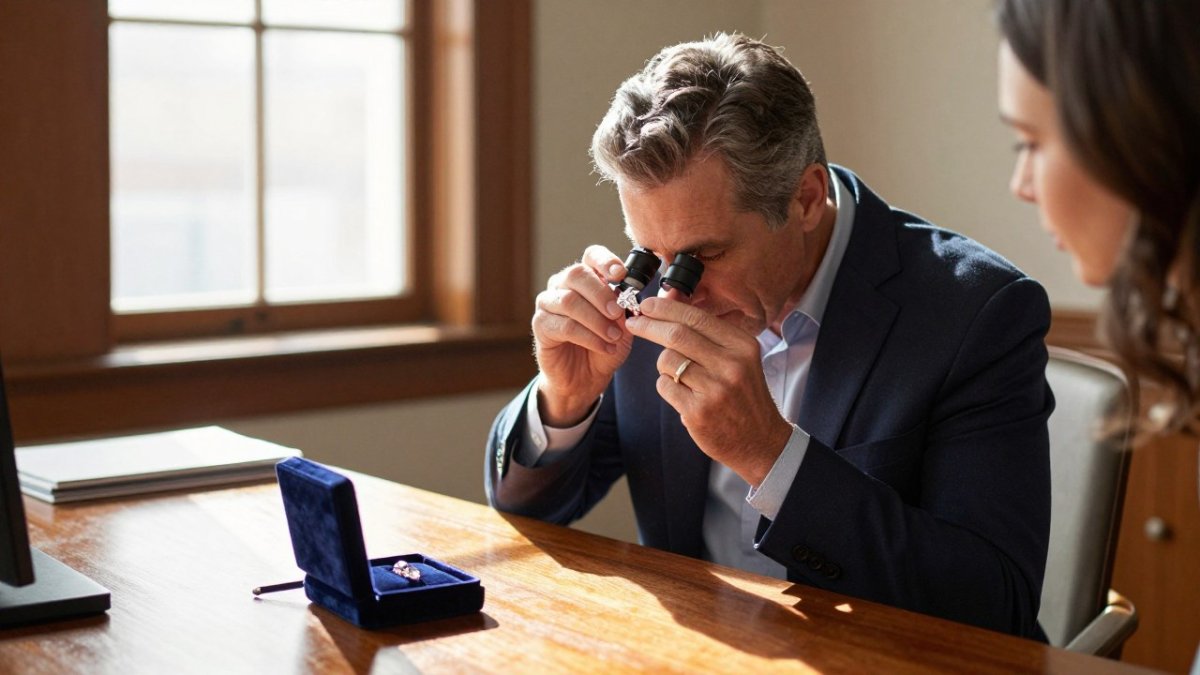
When you get an appraisal, check that it includes the appraisal date, a full item description, and a clear statement of replacement value. Ask whether the appraiser is credentialed and whether they use current retail data.
Resale Value and Why It Differs From Replacement Cost
Resale value is what you could sell the piece for, usually much less than retail, so it is not the figure to use when you learn how to calculate replacement cost for high-value jewelry. Pawn shops and estate buyers pay based on melt value and resale demand, not design or brand.
Replacement cost is higher because it reflects what a store would charge to sell you the same item. This is why an appraisal that lists resale value can understate what you need to replace the jewelry after a loss.
Replacing Rare, Vintage, or Discontinued Pieces
Some jewelry cannot be bought new. Vintage pieces, discontinued designs, and one-of-a-kind creations need a different approach.
For these items, an appraiser may look at comparable pieces sold at auction or by specialist dealers. They may also consider the cost of commissioning a close copy. Document the piece thoroughly, since a unique item is harder to replace from a store shelf.
Keeping Your Jewelry Valuation Current With Bringas Insurance
Jewelry values change over time, so an appraisal from several years ago may no longer reflect what it would cost to replace. Review your valuations at least once a year, and after major life events such as buying new pieces or moving.
Contact Bringas Insurance to request a free quote.
Frequently Asked Questions
How do you calculate the replacement value of jewelry?
Start with the current retail price of an item that is the same or of like kind and quality, using recent retail price lists, jeweler quotes or a qualified appraiser's research. Adjust for the specific metal weight, gemstone carat, cut, color and clarity, and for any custom craftsmanship or brand premium. Document each source and the date you gathered it, because insurers compare replacement estimates against current retail markets. Updating the figure every few years keeps it aligned with prices as they change.
What is the difference between jewelry replacement value and fair market value?
Replacement value is the retail amount needed to buy a comparable piece new today. Fair market value is the price a willing buyer and willing seller would agree on, and it is usually lower because used jewelry sells for less than retail. Resale value is what you would actually receive if you sold the piece. Insurance replacement coverage is generally based on replacement value, which is why a jewelry appraisal for insurance purposes focuses on retail pricing rather than resale.
What information should a jewelry appraisal include?
A useful appraisal includes a detailed item description, metal type and weight, gemstone type, carat weight, cut, color and clarity, and any grading report references. It should list the appraiser's credentials, the appraisal date, the method used to determine value, and the value amount with its basis, such as replacement value. Photographs and serial or certificate numbers help confirm the item later. Ask for a written report rather than a verbal estimate.
How often should high-value jewelry be reappraised?
Many owners update an appraisal every three to five years, and sooner when precious-metal prices or gemstone markets shift significantly, or after you buy or sell pieces. Keeping your schedule of jewelry current with your insurer helps ensure coverage reflects today's replacement cost. Contact Bringas Insurance for guidance on when an update makes sense for your collection.